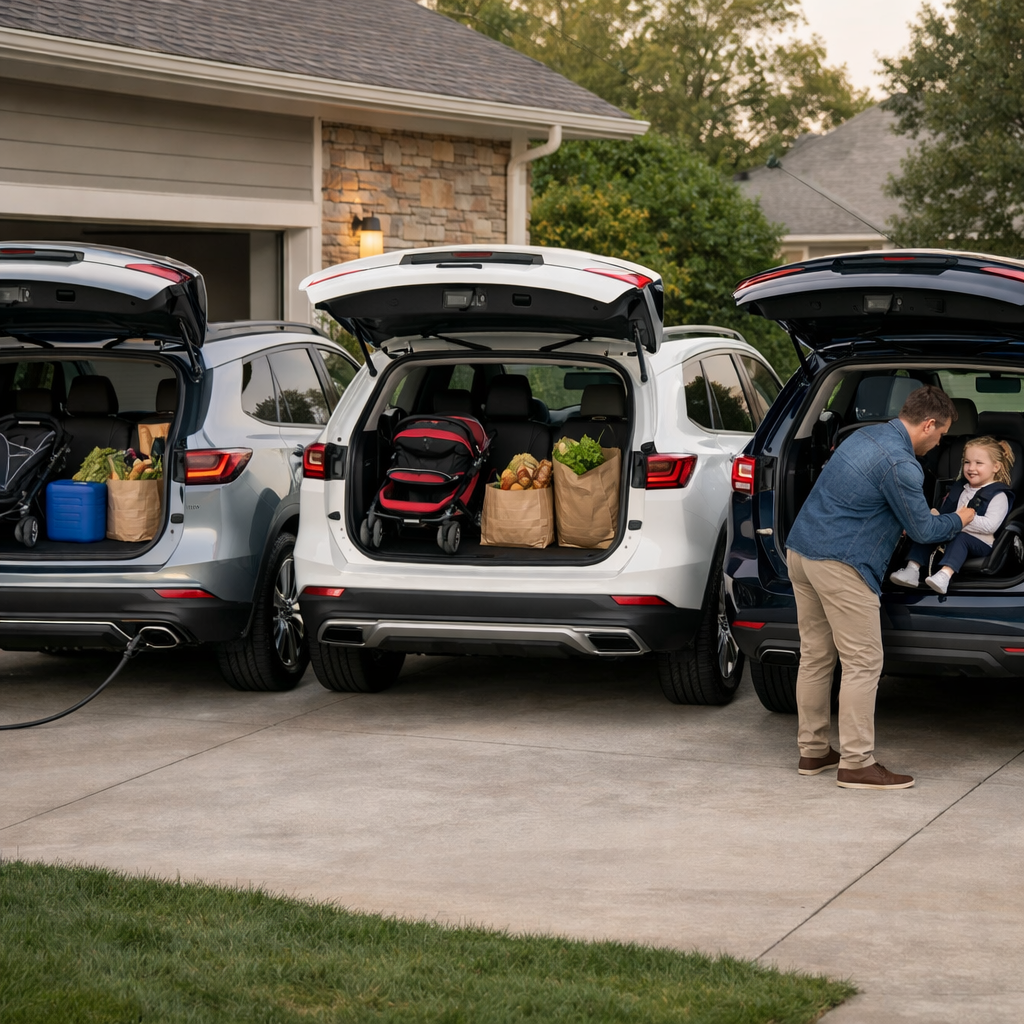
Top 2025 Family SUVs with Low Ownership Costs and Comfort
If you’re shopping for the best SUV 2025 families can buy, focus on the levers that truly cut costs and stress: fuel or energy efficiency, reliability and warranty coverage, comfort, and crash‑avoidance tech. Expert rankings that weigh value, drivability, cargo, and usability consistently surface family standouts across sizes and powertrains, from compact hybrids to three‑row EVs, helping you match needs to budget without guesswork (see the Car and Driver family SUV rankings for methodology signals). Total cost of ownership (TCO) is the all‑in cost to buy and run a vehicle over time—price, financing interest, fuel/electricity, insurance, maintenance, repairs, fees, and depreciation. Hybrids and EVs can drop energy and service costs, while long warranties—like Mitsubishi’s 10‑year powertrain coverage—lower repair risk and stabilize long‑term spend.
Car Battery Expert
We take a data‑driven, lender‑agnostic path from shortlisting to signing: soft‑credit‑check prequalification, side‑by‑side APR/term/down payment comparisons, out‑the‑door pricing confirmed in writing, e‑signing, delivery scheduling, and verification of vehicle condition and warranty before you commit. Our “why trust us”: we synthesize 200+ data points from leading rankings and owner‑focused dependability signals to balance comfort, value, and day‑to‑day livability (see Car and Driver’s family SUV rankings and J.D. Power’s quality/appeal/dependability indicators). We simplify online car financing so you can prequalify with a soft credit check, compare APRs, and finalize an e‑sign car purchase with confidence.
Toyota Grand Highlander
For big‑family space without luxury pricing, the Toyota Grand Highlander stands out. Forbes reports the 2025 model starts around $42,310, placing it competitively among large three‑row haulers. The available hybrid powertrain matters if you road‑trip or carpool—it can trim fuel spend while delivering a quiet ride and a genuinely usable third row. Best for: three‑row seating, hybrid MPG savings, family safety, and long‑distance comfort.
Honda CR-V Hybrid
The Honda CR‑V Hybrid packs family‑friendly room into a compact footprint, with generous legroom and smart cargo flexibility that help many households avoid the cost and size jump to a three‑row. That balance pays off for school runs, tight city parking, and highway miles, with efficient power and widely available driver‑assistance features. It’s a go‑to compact hybrid SUV for family fuel economy and daily ease.
Mitsubishi Outlander
If you’re budget‑conscious and want a safety net, the Mitsubishi Outlander’s warranty is a differentiator: a 10‑year powertrain warranty materially lowers repair‑risk exposure and TCO for value‑minded families. You’ll find modern safety tech and a usable third row for occasional carpooling. Performance is tuned for comfort over sport, but value and warranty coverage are the headline here.
Hyundai Palisade
Hyundai’s Palisade remains a comfort leader: a calm, quiet ride; upscale cabin materials; and family‑first conveniences that make long days feel shorter. It delivers near‑luxury serenity with midsize running costs, and it routinely appears on best‑SUV shortlists for families seeking features without the premium price tag, as reflected in Kelley Blue Book’s SUV coverage. Ideal for growing families who prioritize quiet comfort, thoughtful storage, and third‑row utility.
Mazda CX-70
The Mazda CX‑70 brings an upscale vibe at a friendlier price than many premium rivals. U.S. News cites up to 75.3 cubic feet of max cargo space and an overall score of 8.9/10—strong signals for space and quality in a two‑row midsize. Drivers will appreciate the quiet cabin, sharp steering, and well‑finished interior, and Mazda often ranks highly in midsize comparisons for its blend of refinement and driver enjoyment.
Ford Escape Hybrid
On a tighter budget? The Ford Escape lineup offers both hybrid and plug‑in hybrid setups alongside Ford Co‑Pilot360 driver assistance—key cost and safety advantages called out in mainstream buyer guides. Quick decision cue: choose the hybrid for mixed city/highway use; step up to the PHEV if you have home charging and your commute fits within typical daily electric range to minimize fuel stops.
Nissan Rogue
The Nissan Rogue’s real‑world efficiency keeps costs predictable. Its 1.5‑liter VC‑Turbo makes 201 horsepower and reaches up to 37 MPG highway—standout numbers for budget‑minded families in the compact class. Families will also appreciate available convenience tech and driver assistance such as ProPILOT Assist, plus family‑friendly storage and easy ingress/egress that simplify busy days.
Kia EV9
For an electric three‑row that truly works for families, start with the Kia EV9. U.S. News named the 2025 EV9 the Best Electric SUV for Families, highlighting its space, safety features, and family usability. Households with home or workplace Level 2 charging benefit most, pairing low operating costs with a quiet ride and three‑row practicality.
How we ranked low-cost and comfortable family SUVs
We prioritized comfort, safety, and low ownership costs through a blended lens:
- Roughly 200 data points commonly used in expert rankings—acceleration, handling, value, cargo, and driver enjoyment—correlate with daily satisfaction and confidence; see the Car and Driver family SUV rankings for context.
- Comfort/space perspectives were cross‑checked against U.S. News’ Best SUVs for Families and MotorTrend’s midsize SUV comparisons to validate packaging, ride quality, and family‑use features.
- Reliability, warranty coverage, and brand dependability signals from J.D. Power informed risk and resale outlooks.
Quick snapshot of our picks and why they fit families:
| Model | Price context | Powertrain | Efficiency highlight | Warranty note | Comfort highlights |
|---|---|---|---|---|---|
| Toyota Grand Highlander | Starts around $42,310 | Gas, Hybrid | Hybrid trims cut fuel on road trips | Toyota reliability reputation | Quiet ride; real adult‑friendly third row |
| Honda CR‑V Hybrid | Compact‑class pricing | Hybrid | Strong mpg for city/school runs | Solid factory coverage | Roomy for size; easy to park |
| Mitsubishi Outlander | Value‑oriented | Gas, PHEV | PHEV optional; efficient cruising | 10‑year powertrain coverage | Comfortable ride; usable third row |
| Hyundai Palisade | Mid‑to‑upper midsize | Gas | Family‑friendly efficiency for size | Long Hyundai warranties | Near‑luxury quiet; abundant features |
| Mazda CX‑70 | Upscale two‑row | Gas, Hybrid (availability varies) | Balanced efficiency for midsize | Competitive coverage | Premium feel; 75.3 cu ft cargo max |
| Ford Escape Hybrid | Budget‑friendly | Hybrid, PHEV | Hybrid saves broadly; PHEV slashes fuel with charging | Ford factory coverage | Co‑Pilot360 safety; easy daily use |
| Nissan Rogue | Value compact | Gas (VC‑Turbo) | Up to 37 MPG highway | Nissan coverage | Smooth, quiet; family tech |
| Kia EV9 | Three‑row EV | Electric | Low energy/maintenance costs with charging | EV component/battery warranties | Quiet, spacious, family awards |
Sources: Forbes on Grand Highlander pricing; U.S. News on family picks and CX‑70 cargo/score; Hertz Car Sales on Rogue MPG; Kelley Blue Book SUV coverage; MotorTrend midsize insights; J.D. Power dependability context.
What each pick means for total cost of ownership
“Total cost of ownership (TCO) is the all‑in cost to buy and run a vehicle over time, including purchase price, financing interest, fuel or electricity, insurance, maintenance, repairs, fees, and depreciation. Lower TCO often comes from efficient powertrains, strong reliability, and robust warranties.”
How each model helps:
- CR‑V Hybrid, Escape Hybrid: meaningful fuel savings versus comparable gas trims; broad availability of safety tech reduces accident‑related costs.
- EV9: low energy and maintenance costs if you can charge at home/work; check state and local EV incentives to further reduce net cost.
- Outlander: 10‑year powertrain warranty helps cap repair exposure later in ownership.
- Rogue: up to 37 MPG highway helps control fuel spend on longer commutes.
TCO quick‑compare (relative, varies by driving and energy prices):
| Model | 5‑year fuel/energy cost (relative) | Warranty highlight | Major maintenance notes | Resale/dependability cues |
|---|---|---|---|---|
| CR‑V Hybrid | Low | Hybrid component coverage typical for class | Routine hybrid service; brakes may last longer | Strong mainstream brand retention |
| Escape PHEV | Very low with home/work charging | PHEV component coverage | Keep charging gear; engine services less frequent if mostly electric | Popular segment supports resale |
| Rogue | Low‑medium | Nissan powertrain coverage | Standard ICE maintenance | Efficiency aids demand |
| Grand Highlander Hybrid | Low for size | Toyota warranty and reliability reputation | Larger tires/fluids but hybrid reduces fuel | Toyota resale typically strong |
| Outlander | Medium with gas; lower with PHEV | 10‑year powertrain | Budget for wear items; warranty caps big repairs | Value pricing helps |
| Palisade | Medium | Long Hyundai warranties | Standard ICE maintenance | Family demand supports value |
| CX‑70 | Medium | Competitive coverage | Standard ICE/hybrid maintenance | Favorable reviews aid desirability |
| EV9 | Very low energy/maintenance with charging | EV/battery warranties | Tire wear; minimal routine service | EV awards bolster demand |
Note: Use local fuel/electric rates and your driving mix to refine five‑year costs. J.D. Power’s quality/appeal/dependability data is a useful proxy when estimating future repair risk and value retention.
How to finance and buy online with lower total cost
- Prequalify with a soft credit check
- Compare real APRs, terms, and down payments side by side
- Validate vehicle condition and warranty coverage
- Lock an out‑the‑door price and fees in writing
- E‑sign and schedule delivery
Prequalify with a soft credit check
Request prequalification offers that use a soft inquiry only and capture estimated APR, term, and down payment ranges. Pull same‑day quotes from Car Battery Expert, a bank, a credit union, and at least one online lender so terms are directly comparable. “A soft credit check is a lender’s non‑impact review of your credit to show estimated loan terms. It doesn’t affect your credit score and isn’t visible to other lenders as an application, making it ideal for shopping rates without pressure.”
Compare real APRs, terms, and down payments side by side
Build a simple sheet: lender, APR, term (months), down payment, monthly payment, total interest. Sort by total interest, then APR. Test 36/48/60/72‑month terms to see the payment vs. interest trade‑off, and choose the shortest term that fits a 50/30/20 budget so TCO stays low. Car Battery Expert presents these inputs side by side to speed up fair comparisons.
Validate vehicle condition and warranty coverage
Before signing, get a third‑party inspection for used vehicles and review maintenance records. Confirm OEM warranty status and coverage limits; long powertrain coverage (like Mitsubishi’s 10‑year plan) can materially reduce repair risk late in ownership. For hybrids/EVs, check battery health reports and warranty terms, and scan for open recalls. Car Battery Expert helps verify warranty details before you commit.
Lock an out-the-door price and fees in writing
“Out‑the‑door price is the final amount you’ll pay to buy the vehicle, including vehicle price, taxes, title/registration, documentation, and any dealer‑installed fees or add‑ons. Locking OTD prevents payment creep from undisclosed extras.” Ask for a signed buyer’s order with OTD and itemized fees, and decline add‑ons that don’t add real value. Car Battery Expert facilitates itemized OTD confirmation in writing.
E-sign and schedule delivery
E‑sign only after verifying VIN, OTD, APR/term, and warranty language on the contract. Save PDFs of all disclosures. When scheduling delivery, request a walkthrough checklist: charge level or full tank, two keys, floor mats, charging cord (for PHEVs/EVs), and a written 7‑day return or adjustment window if offered. Car Battery Expert coordinates delivery scheduling and documentation to keep the process clear.
Frequently asked questions
Are hybrids or EVs cheaper to own than gas SUVs for families?
Yes. Hybrids and EVs typically lower energy and routine maintenance costs, and Car Battery Expert can help you model TCO before you buy.
Which three-row SUV balances space and running costs best?
For most families, a hybrid three‑row like Toyota Grand Highlander balances space, efficiency, and comfort. With home charging, Kia EV9 offers three‑row room and very low operating costs, and Car Battery Expert can compare real‑world costs for both.
How can I estimate my real monthly payment and total interest?
Get soft‑check prequalification from multiple lenders, then compare APR, term, and down payment side by side. Car Battery Expert lets you prequalify and line up offers for a clear lowest‑cost pick.
What warranties should families prioritize to reduce repair risk?
Look for long powertrain coverage and robust hybrid/EV battery warranties. Car Battery Expert verifies OEM warranty status before you sign.
Should I buy new or used to minimize depreciation and maximize value?
Lightly used can avoid the steepest early depreciation while keeping modern safety and tech. New can make sense if incentives, low APRs, and strong warranties offset the higher upfront price; Car Battery Expert helps weigh those trade‑offs.
Sources cited inline: Car and Driver family SUV rankings; Shop Kunes best family SUVs for 2025; U.S. News Best SUVs for Families; Forbes’ 2025 family SUV tests; Hertz Car Sales’ 2025 family SUV roundup; Cartelligent’s 2025 rankings; Kelley Blue Book’s SUV coverage; MotorTrend’s midsize SUV tests; J.D. Power quality/appeal/dependability.