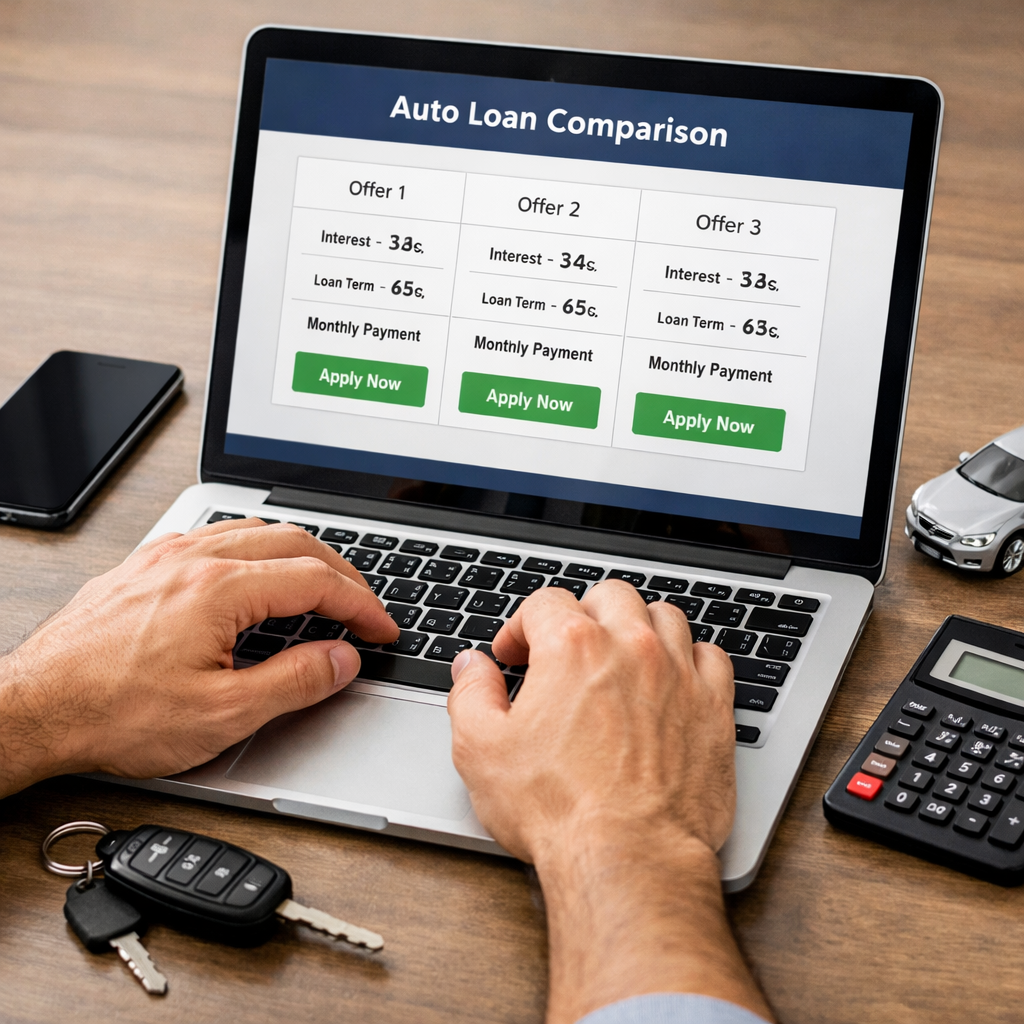
Secure Car Financing Online, Skip the Dealership, Save Time
You can secure online car financing without a dealership visit, from preapproval to e-signing and delivery. The key is to line up a digital car loan before you shop, compare a few offers, and verify terms carefully before you e-sign. Buyers who complete financing steps online save time, avoid upsells, and gain leverage on the out-the-door price. Below is a streamlined, step-by-step path—grounded in industry data—to preapprove without hurting your credit, close remotely with confidence, and plan for total ownership cost, including battery maintenance and replacements.
Why online car financing saves time
Car buyers who applied for financing online saved about 30 minutes at the store, and those who e-signed saved roughly 38 minutes, according to the Cox Automotive Car Buyer Financing Journey study. Many shoppers also spend a total of 4 hours and 23 minutes on financing tasks across the journey—digital steps shift more of this work to your schedule and device.
Most shoppers research financing before they ever step on a lot: 87% researched financing pre-visit in a WardsAuto poll. That research correlates with higher satisfaction. Progressive reports that 78% of online car buyers were highly satisfied versus 58% for traditional buyers, and 70% were highly satisfied with online financing experiences.
Online preapproval is a lender’s preliminary loan offer based on a soft credit check and basic financial information. It estimates your maximum amount, APR range, and term before you shop, so you can compare options and negotiate confidently without committing to a specific vehicle.
- Source: Cox Automotive Car Buyer Financing Journey study
- Source: WardsAuto poll on time savings and online financing research
- Source: Progressive online car buying trends
How online preapprovals work
The flow is straightforward:
- Enter basic info (identity, income, housing, budget).
- Lender runs a soft credit pull, if applicable, to estimate terms without affecting your score.
- You receive a preapproval range with potential APRs, terms, and a max amount.
- Upload documents (ID, income, residence) to verify.
- When you choose a vehicle and finalize, the lender performs a hard pull, locks your rate, and prepares funding.
J.D. Power notes that preapproval and online financing are now primary acquisition channels for lenders, shifting competition to earlier in the journey. Shoppers lean into comparison, too: roughly 45% start with financing research and about 70% compare two or more lenders.
A soft inquiry checks your credit without affecting your score; a hard inquiry can temporarily lower your score by a few points and occurs when you formally apply or fund the loan.
- Source: J.D. Power analysis on the shift to online pre-approval
Where to secure online financing without a dealer visit
You have three main paths to a fully remote close:
Online lenders/fintechs
- Pros: Streamlined preapprovals, digital documents, rapid decisions, and fast funding; they increasingly shape lender selection before any dealer contact.
- Consider: Rates and fees vary; ensure there is no prepayment penalty.
- Remote closing: Commonly offer e-sign auto loan flows and remote ID checks.
Banks and credit unions with digital portals
- Pros: Trusted brands, relationship pricing, and strong identity verification; credit unions may offer member discounts.
- Consider: May require membership or branch affiliation; funding can be slightly slower.
- Remote closing: Many support e-signing with secure identity verification.
Online marketplaces and auto platforms
- Pros: One-stop rate comparisons, calculators, bundled checkout with trade-in handling, and logistics support.
- Consider: Marketplace quotes can be estimates; verify lender of record and fees before you lock.
- Remote closing: Increasingly provide fully online checkout, scheduling, and delivery.
These platforms offer 24/7 access, expansive inventory searches, virtual tours, and fewer friction points than traditional processes. The sector’s maturity shows in its scale—online car buying reached an estimated $320.4B in 2023 and could double by 2034—demonstrating robust infrastructure for remote financing and delivery.
- Source: J.D. Power analysis on early lender selection
- Source: Canadian Lenders Association overview of digital dealers
- Source: Autoblog report on online car buying’s growth
Comparing lender types for fully digital closings
Use this table to weigh speed, transparency, identity controls, and total cost:
| Lender type | Preapproval speed | Rate range (typical) | Fees/conditions | E-sign support | ID verification strength | Funding timeline | Best for |
|---|---|---|---|---|---|---|---|
| Online lenders/fintechs | Minutes to hours | Competitive for prime; varies | Possible origination fee; no-prepay options vary | End-to-end common | Strong digital KYC, biometrics | Same day to 2–3 days | Speed, convenience, broad credit profiles |
| Banks | Same day to 1–2 days | Often competitive with autopay | May bundle discounts; stricter underwriting | Widely supported | Robust, bank-grade controls | 1–3 days | Relationship pricing, stability |
| Credit unions | Same day to 1–2 days | Often favorable for members | Membership required; local nuances | Widely supported | Robust, member verification | 1–3 days | Low rates for members, service focus |
| Marketplaces/platforms | Instant comparisons | Aggregated offers from lenders | Platform fees rare; verify lender terms | Platform-driven | Varies by partner | Depends on chosen lender | Shoppers who want fast comparisons |
Digital lending can be as secure—or more secure—than in-person when strong ID verification and facial recognition are used.
- Source: Canadian Lenders Association overview of digital dealer security
What to verify before you e-sign
Review these items line-by-line before you digitally sign:
- APR, term, total of payments, fees, and whether the rate is fixed or variable. Small APR differences can cost thousands over a five-year term.
- Optional add-ons (GAP, service contracts) and whether they’re included or declined.
- Purchase agreement alignment: out-the-door price, taxes/fees, and trade-in value.
- Payment schedule, due dates, late fees, autopay options, and any prepayment penalty.
Red flags:
Unclear APR or missing total of payments.
Undisclosed add-ons or last-minute warranties that inflate cost.
Any doc that changes your APR or inserts extras without explicit consent.
Source: Transparency insights from an auto retail blog
End-to-end remote purchase checklist
- Set your budget and preferred payment using calculators; many shoppers start with financing research and payment planning.
- Get two to three online preapprovals; compare APRs, terms, fees, and total of payments.
- Select your vehicle; review history reports, return policies, and use virtual tours or third-party inspections; include a battery health check when possible.
- Lock financing; complete ID checks and e-sign once terms match your purchase agreement.
- Arrange title/registration and insurance; confirm who files, timelines, and fees.
- Delivery or pickup; verify VIN, odometer, keys, and all executed documents on arrival.
Buyers spend about 4h23m on financing tasks overall; shifting steps online typically shaves 30–38 minutes from in-store time.
- Source: WardsAuto poll on planning behaviors
- Source: Cox Automotive study on time saved
Title, registration, and insurance considerations online
Most lenders coordinate the title. Registration may be handled by the platform, a third-party service, or via DMV-by-mail. Some states still require notarization or an original ink (wet) signature; surface these requirements early to avoid delivery delays.
An e-signature is an electronic method of agreeing to documents. Valid e-signatures use identity checks, audit trails, and tamper-evident records to meet legal standards comparable to ink signatures in many jurisdictions.
Before delivery, confirm:
- Who files registration, expected fees/taxes, and timing for plates or temp tags.
- Proof-of-insurance requirements and when to provide a binder.
- Any state-specific notarization or wet-sign requirements.
Security, fraud prevention, and your data
Digital lending can be more secure than in-person when platforms use strong identity verification and facial recognition, and the industry is moving to omnichannel models that preserve convenience with high security.
That said, some dealer-avoidance patterns can resemble fraud, which may trigger extra ID checks or income verification. Stay responsive to authentication requests, keep documentation clear, and be transparent about residence and employment to speed underwriting.
Consumer security checklist:
Use multifactor authentication and unique passwords.
Verify HTTPS, company details, and lender licensing.
Avoid emailing photo IDs; use in-portal uploads only.
Review privacy policies and data-sharing terms.
Source: Canadian Lenders Association security overview
Source: Industry commentary from CarDealershipGuy
Cost modeling beyond the APR
Compare monthly payment and total paid—then pressure-test your plan.
Example model (illustrative only, $30,000 financed after down payment/trade and taxes/fees):
| Scenario | APR | Term (months) | Est. monthly | Est. total paid |
|---|---|---|---|---|
| Base case | 6.5% | 60 | $586 | $35,136 |
| +1% APR | 7.5% | 60 | $600 | $36,024 |
| +12 months | 6.5% | 72 | $504 | $36,281 |
Also account for:
- Down payment or trade-in, taxes/fees, and any GAP/service contracts.
- Insurance premiums and deductibles.
- Battery and maintenance planning. AGM and EFB batteries (common in start-stop vehicles) cost more but last longer when maintained; short-trip drivers should consider a smart maintainer to protect battery health in extreme climates. Car Battery Expert’s fitment tools and maintainer guides help you budget replacements accurately.
Why this matters: The median buyer now needs nearly 43 weeks of income to afford the average new vehicle, and typical monthly payments have reached about $691, so modeling total cost is essential.
- Source: WardsAuto poll on affordability pressures
For tools and how-tos, see Car Battery Expert’s fitment tools, battery monitor picks, and multimeter guides:
- Car Battery Expert (fitment tools and ownership guides)
- Best car battery monitors
- Best multimeters for car batteries
How to avoid dealership add-ons when you already have financing
- Script it: “I’m preapproved. Please show the out-the-door price without add-ons.” Keep trade-in, price, and financing discussions separate.
- Decline extras unless you’ve pre-researched them. Undisclosed add-ons can cost thousands over the term.
- Shop independent GAP and extended service plans online to compare true cost. Confirm that adding any product won’t trigger a new hard pull or change your APR without consent.
For battery-related add-ons, benchmark prices with Car Battery Expert before you decide.
- Source: Transparency insights from an auto retail blog
When an in-person visit may still be required
- State-specific notarizations, DMV verifications, or trade-in inspections.
- Identity verification escalations tied to fraud flags or unconventional income documentation.
- Delivery handoff rules for certain lenders or platforms.
Set expectations accordingly: buying a car online remains more complex than a typical e-commerce purchase and still involves substantial paperwork.
- Source: Consumer Reports guide to buying a car online
Car Battery Expert’s stance on online car buying and ownership costs
Transparent online financing works best when paired with disciplined cost modeling and a firm out-the-door target. We recommend securing a loan offer before contacting any seller to save time, increase satisfaction, and widen lender choice.
Plan for real-world ownership costs. Budget for battery replacement intervals—especially if your vehicle uses AGM or EFB for start-stop—plus a smart maintainer if you mostly take short trips or face harsh temperatures. Use our fitment tools, battery monitors, and multimeter guides to keep the car reliable without upsells.
- Source: Consumer Reports guide reinforcing pre-shopping prep
Frequently asked questions
Can I complete a car loan fully online without visiting a dealership?
Yes—many lenders and auto platforms support remote preapproval, e-signing, and delivery; some states or lenders may still require limited in-person steps for notarization, ID checks, or trade-in inspection. Plan for ownership costs alongside financing using Car Battery Expert’s battery guides.
Will applying for online preapproval hurt my credit score?
Most preapprovals use a soft inquiry that doesn’t impact your score. Your score may dip slightly when you finalize and the lender performs a hard inquiry to fund the loan.
What documents do I need to finalize an online auto loan?
You’ll typically need a government ID, proof of income (pay stubs or bank statements), proof of residence, insurance, and, for trade-ins, your title or payoff letter.
How fast can funds be issued and a vehicle delivered with online financing?
Many digital lenders issue decisions within hours and arrange delivery within a few days, depending on verification, state paperwork, and transportation logistics.
Can I refinance later if I find a better rate after buying online?
Yes. If your credit improves or rates drop, refinancing can lower your payment or total interest; check for prepayment penalties and compare total costs before switching.