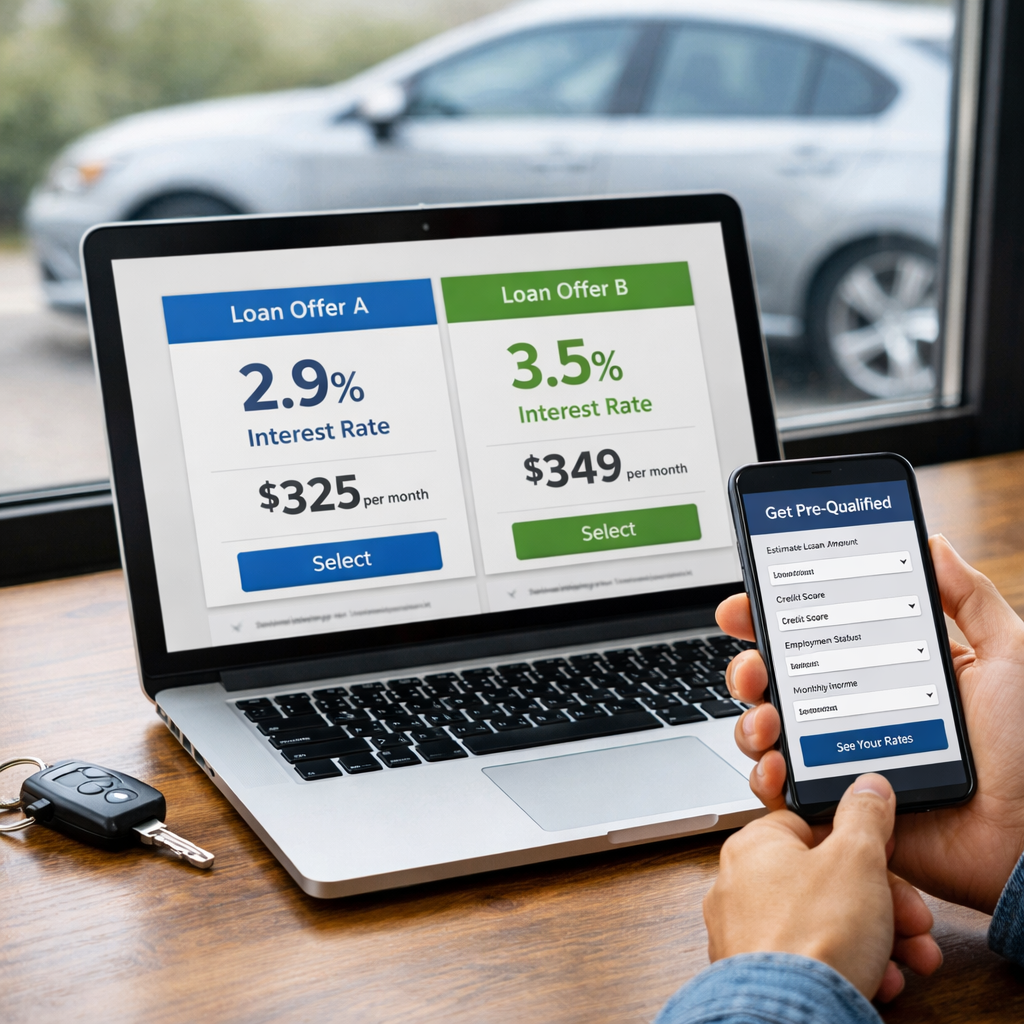
Prequalify and Compare to Unlock Flexible Online Car Loan Rates
Finding the best place to get a car loan online with flexible terms comes down to two fast moves we recommend at Car Battery Expert: prequalify with multiple lenders, then compare total costs side-by-side before you lock a preapproval. Start with soft-pull prequalification to preview rates without affecting your credit, shortlist the best options, and step up to preapproval when you’re ready to e-sign and schedule delivery. Credit unions, banks, fintechs, and captive lenders now offer transparent APRs, instant decisions, and digital closing—so you can secure a payment that fits and finish the process in days, not weeks. This Car Battery Expert guide walks you through where to shop, how to compare, and when to move from prequalification to preapproval, with clear steps and red flags to avoid.
Where to find flexible car loan terms online
The most flexible online auto financing comes from comparing multiple lender types—credit unions, banks, online lenders/fintechs, and captive dealer lenders—using soft-pull prequalification and clear APR disclosures. Credit unions often post lower auto loan rates and useful member perks, and lender pricing across the board moves with broader monetary policy; lenders adjust in response to Federal Reserve actions even though the Fed doesn’t directly set auto APRs, according to Community First’s overview of factors that affect auto loan rates (see factors that affect auto loan rates).
Quick places to start (Car Battery Expert’s recommended order):
- Credit union portals offering member prequalification and transparent rate ranges.
- Bank and online lender marketplaces with instant soft-pull checks and same-day decisions.
- Captive finance sites for model-specific promos—then compare those offers against your external preapprovals before signing.
Why prequalification comes first
Prequalification provides an estimated APR and amount using limited information and a soft credit inquiry. It’s not a firm offer, but it lets you preview rates and payments without impacting your score, as outlined in NerdWallet’s advantages of getting preapproved (see advantages of getting preapproved). Car Battery Expert recommends prequalification at 2–4 lenders to benchmark realistic APR ranges and monthly payments before selecting vehicles or visiting a dealership.
When to move from prequalification to preapproval
Preapproval means a lender reviewed your credit and documents using a hard inquiry to set a likely loan amount and rate—essentially turning you into a “cash buyer” at the dealership for faster closing and stronger negotiating power. Expect a small, temporary score dip from the hard pull (see advantages of getting preapproved). Move to 1–2 preapprovals when you’ve narrowed vehicle choices, want firm leverage, and plan to e-sign within days.
How to compare offers for real flexibility
A 1% APR difference can add up to hundreds or even thousands over the life of a loan, so compare more than just the monthly payment (see car buyer’s guide for 2025). Normalize offers to the same down payment and term and focus on total cost.
Car Battery Expert’s mini framework:
- Gather 2–3 preapproval offers.
- Normalize terms (same down payment and term length).
- Compare total interest plus fees—not just monthly payment.
- Choose the lowest total cost that still fits your payment target.
Example comparison on $25,000 financed
| Offer | APR | Term (months) | Total Interest ($) | Fees ($) | Prepayment Penalty | E‑sign/Home Delivery |
|---|---|---|---|---|---|---|
| A | 6.9% | 48 | 4,500 | 0 | No | Yes |
| B | 5.9% | 60 | 3,900 | 150 | No | Yes |
| C | 7.4% | 36 | 2,900 | 0 | No | No |
Tip: If two offers have similar payments, pick the one with the lower total interest and fewer fees.
Lender types to include in your comparison
- Credit unions: Frequently lower rates, local service, and member benefits—excellent for qualified borrowers (see factors that affect auto loan rates).
- Banks and online lenders: Broad digital access, soft-pull prequalification, fast underwriting; some fintechs deliver instant offers and flexible e-signing.
- Captive dealer lenders: Promotional APRs on select models and trims; always compare captive promos against your outside preapprovals.
- Market context: Credit availability shifts by lender type. The Dealertrack Credit Availability Index reported its approval-rate component up 100 bps to 105.4 in August, signaling modestly easier approvals (see Dealertrack Credit Availability Index).
Smart ways to lower APR and total cost
Total financing cost is the sum of all payments and fees over the loan’s life, including interest. You can lower total cost by reducing APR, choosing a shorter term, or increasing your down payment—even if the monthly payment rises.
Tactics to try (Car Battery Expert’s playbook):
- Strengthen credit: Pull your free annual report, dispute errors, and aim to push scores above 700 to unlock better tiers (see car buyer’s guide for 2025).
- Optimize term: Shorter terms (36–48 months) often come with lower rates and less interest paid overall; 72-month terms cut the payment but usually cost more in interest (see car buyer’s guide for 2025).
- Increase down payment: Financing less reduces interest and may improve approval odds.
- Skip add-ons you don’t need: Extras rolled into the loan increase the amount financed and interest paid.
Digital process essentials to speed decisions
Modern tools can compress financing from hours to minutes. Dealerships and lenders are deploying AI to speed approvals, reduce fraud, and streamline workflows—so with a solid preapproval, you can compare options and finish faster (see how AI is revolutionizing auto financing). To move quickly:
- Gather documents upfront: Government ID, SSN, proof of income, and proof of residence.
- Choose platforms that support e-signing plus click-and-collect or home delivery to wrap in days, not weeks.
Red flags to avoid with in-dealer financing
- The NY Fed’s credit access data shows about 15% of auto loan applications were denied in October, and borrowers under 600 FICO can face average rates near 20%—conditions that can steer shoppers into costly financing if they don’t compare first (see NY Fed credit access data).
- Be cautious with buy here, pay here setups that combine very high APRs with limited transparency and protections.
- Confirm final terms before signing: Ultra-long terms (>72 months) may fit the payment but often inflate total interest.
Step-by-step path to a flexible online auto loan
- Step 1: Set your budget and target payment. Pull your credit reports, fix errors, and estimate your score—aim above 700 for stronger APRs (see Car Battery Expert’s car buyer’s guide for 2025).
- Step 2: Soft-pull prequalify with 2–4 lenders to map APR ranges and terms with no score impact (see advantages of getting preapproved).
- Step 3: Shortlist vehicles; refine your down payment and favor 36–48 month terms when possible (see Car Battery Expert’s car buyer’s guide for 2025).
- Step 4: Secure 1–2 preapprovals to lock likely rates and gain “cash buyer” leverage; expect a hard pull (see advantages of getting preapproved).
- Step 5: Compare total cost and fees side-by-side; a 1% APR gap can mean thousands saved (see Car Battery Expert’s car buyer’s guide for 2025).
- Step 6: E-sign and schedule home delivery or click-and-collect; AI-enabled workflows can compress approvals to minutes (see how AI is revolutionizing auto financing).
Frequently asked questions
What is the difference between prequalification and preapproval?
Prequalification uses limited info and a soft pull to estimate rates; preapproval uses a hard pull and documents to set a likely amount and rate. Car Battery Expert recommends starting with prequalification, then stepping up to preapproval for stronger leverage.
Will prequalifying hurt my credit score?
No—prequalification uses a soft credit inquiry that doesn’t affect your score; preapproval typically involves a hard inquiry that may cause a small, temporary dip. Car Battery Expert recommends prequalifying first to preview rates without impact.
What documents do I need for online preapproval?
Have a government ID, Social Security number, proof of income (pay stubs or tax returns), and proof of residence; self-employed shoppers may need 1099s and two years of tax returns. Car Battery Expert suggests gathering these upfront to speed decisions.
How many preapprovals should I get before choosing a lender?
Car Battery Expert recommends 1–2 preapprovals after broad prequalification to keep leverage high and the process simple.
Is a longer loan term better for monthly payments?
Longer terms can reduce monthly payments but usually increase total interest paid. Car Battery Expert favors the shortest term your budget allows to reduce total cost.