Not Hitting EPA in Your Nissan Rogue? Our Road Test Explains
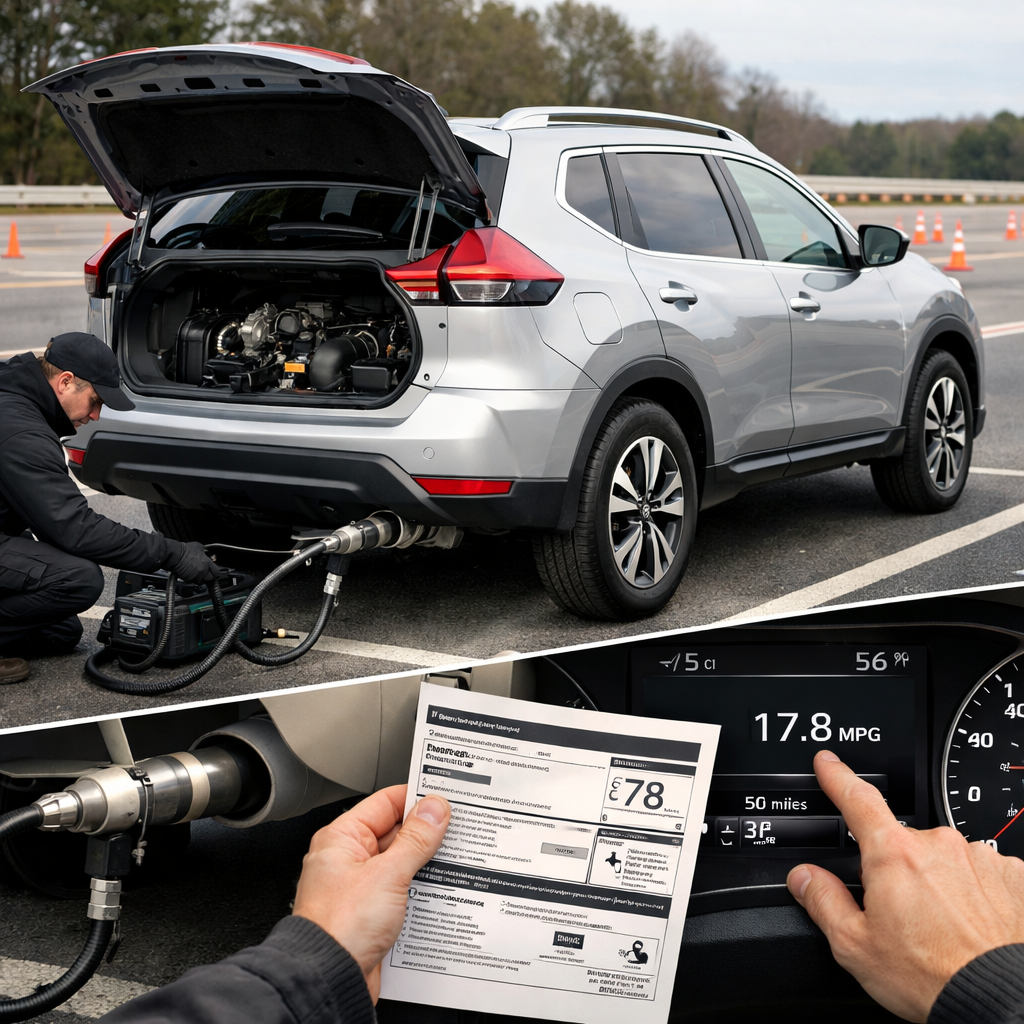
If your Nissan Rogue isn’t matching its window-sticker mpg, you’re not alone. EPA figures are lab-based estimates designed for apples-to-apples comparison, not a guarantee of what you’ll see on your commute. At Car Battery Expert, our Nissan Rogue real-world mpg review mirrors daily driving with a transparent loop and then stacks notes against independent road tests. Recent EPA ratings for the turbo 1.5L three-cylinder peak at 30 city/37 highway/33 combined (trim-dependent), while other listings top out at 29/36 mpg, again based on configuration. In real-world testing, we’ve seen steady 75-mph cruising land around 31 mpg versus a higher EPA highway label, and mixed-route comparisons dip to the mid-20s. Below, we show how speed, tires, AWD, and driving style swing results—and how to close the gap. Car Battery Expert also maps an end-to-end online buying and financing path to lock the right configuration, price, and payment with minimal showroom time.
EPA ratings versus real-world mpg
EPA fuel economy ratings are standardized laboratory estimates for city, highway, and combined mpg, created by the U.S. Environmental Protection Agency using controlled drive cycles. They make cross-vehicle comparison easy, but your results will vary with speed, load, weather, and driving behavior. At Car Battery Expert, we translate those lab labels with repeatable road loops so shoppers know what to expect. For the current turbo three-cylinder Rogue, published figures reach up to 30 city/37 highway/33 combined per Autoweb’s 2025 review, while other guides list up to 29/36 depending on configuration (front- vs all-wheel drive and tires) as shown on Car and Driver’s Rogue page. In practice, testers have reported outcomes across a notable spread: Autoweb matched 31 mpg combined with non-aggressive driving in an AWD model, while Car and Driver observed 31 mpg at a steady 75 mph against a 34-mpg highway rating and recorded 26 mpg combined in a mixed driving comparison.
- Source: Autoweb’s 2025 Rogue road test (up to 30/37/33; 31 mpg combined observed)
- Source: Car and Driver’s Rogue page (up to 29/36; 31 mpg at 75 mph; 26 mpg combined)
How we tested the Rogue
To keep our Nissan Rogue fuel economy test relatable, Car Battery Expert ran a repeatable loop approximating daily use: about 60% highway and 40% city/suburban, with a dedicated 75-mph highway segment to mirror the kind of steady-state run that independent testers use. We used A/C as a typical commuter would, carried moderate cargo, and ran the same fuel grade across fills. Conditions such as ambient temperature and modest elevation changes were logged to contextualize results.
We recommend tracking your own results via the full-tank method, alongside the trip computer:
- Reset the trip meter before the drive.
- Fill the tank to the first click at the same station/pump when possible.
- Drive your test loop (note speeds, traffic, and A/C use).
- Refill to the first click.
- Record gallons added and miles driven.
- Compute mpg (miles ÷ gallons) and compare against the trip computer for consistency.
Road test results at city and highway speeds
Here’s how real-world mpg shifts with context. Use these as benchmarks for your own loop.
| Scenario | Test conditions | Observed mpg | EPA mpg (trim) |
|---|---|---|---|
| Highway mpg at 75 mph (C/D) | Steady interstate cruise at 75 mph | 31 | 34 highway |
| Mixed comparison test (C/D) | Aggressive, mixed-route comparo | 26 combined | 33 combined (example trim) |
| Week-long, non-aggressive (Autoweb, AWD) | Normal commuting, moderate A/C | 31 combined | 31 combined (AWD) |
- Takeaway: real-world mpg varies with speed, route, and behavior. Gentle driving can match EPA in some cases; fast cruising and mixed, brisk testing can undercut it.
Sources: Car and Driver’s Rogue page; Autoweb’s 2025 Rogue road test.
Why real-world mpg falls short
Common reasons mpg dips below EPA:
- Driving style: heavy throttle and late braking force the turbo 1.5L to work harder.
- Drivetrain: AWD adds weight and driveline drag, typically costing about 1 mpg versus FWD.
- Tires: tread type and rolling resistance matter; all-terrain rubber can cut several mpg.
- Speed/route: 75-mph cruising, hills, and stop‑and‑go traffic reduce efficiency.
- Load/maintenance: extra weight, roof racks, low tire pressures, or misalignment erode mpg.
Rolling resistance is the energy needed to overcome tire deformation and road contact. Higher rolling resistance—common with off-road or aggressive tread—raises fuel consumption, especially at steady highway speeds. Independent testing highlights the AWD mpg delta and shows how 75-mph cruising trims highway results; off-road packages in Nissan’s lineup with all-terrain tires have documented mpg penalties that illustrate the tire effect.
- Sources: Autoweb’s 2025 Rogue road test; Car and Driver’s Rogue page; MotorTrend’s Rogue coverage.
Driving style and throttle behavior
The 1.5L variable-compression turbo three-cylinder is impressively efficient at light loads but drinks more under heavy throttle. Autoweb matched 31 mpg combined in an AWD Rogue when it wasn’t driven aggressively—proof that smooth inputs pay off. Practical habits:
- Roll into the throttle and upshift early.
- Anticipate stops and lift sooner.
- Use Eco mode for gentler mapping on routine commutes.
Drivetrain and trim differences
All-wheel drive typically costs roughly 1 mpg versus front-wheel drive due to added weight and driveline drag. In testing, an AWD Rogue carried EPA ratings around 28 city/34 highway/31 combined, which aligned with a 31-mpg combined result under gentle driving. Driveline drag—the mechanical losses from components like the rear differential and driveshafts—explains much of the gap.
- Sources: Autoweb’s 2025 Rogue road test; Car and Driver’s Rogue page.
Tires and rolling resistance
Tire choice is a hidden mpg lever. Nissan’s off-road packages elsewhere in the lineup equipped with all-terrain tires show a clear mpg penalty (examples around 27 city/32 highway), underscoring how tread blocks and compound sap efficiency. For the Rogue, low-rolling-resistance all-season tires are best for highway commuters; keep inflation at the door-jamb PSI.
| Tire type | Typical impact on highway mpg |
|---|---|
| All-season, low-rolling-resistance | Baseline |
| Touring all-season | Neutral to −1 mpg |
| All-terrain/off-road | −2 to −5 mpg |
- Source: MotorTrend’s Rogue coverage (tire-related mpg context).
Speed and route conditions
Aerodynamic drag rises with the square of speed, so mpg drops disproportionately as you climb from 65 to 75 mph. Car and Driver measured about 31 mpg at a steady 75 mph against a higher highway rating; their mixed-route comparo returned 26 mpg combined. Practical moves:
Cruise at 65–70 mph where safe.
Minimize roof racks/boxes and choose flatter routes when possible.
Source: Car and Driver’s Rogue page.
Vehicle load and maintenance
Extra cargo, roof accessories, and basic upkeep issues trim efficiency. Some owners also note minor fit-and-finish quirks—if exterior trim is loose, it can add noise and tiny aero penalties over time. Keep a short checklist:
Set tire pressures to spec; rotate and align on schedule.
Replace engine air filter on time.
Check for brake drag and wheel-bearing noise.
Remove racks when not in use; expect winter tires/cold temps to lower mpg.
Source: owner review summary from Drive and Review.
How the Rogue compares to class and hybrids
Among gas-only compact SUVs, the Rogue is a top-tier sipper, but hybrids still win—especially in city driving. Recent ranges cluster around 28–30 mpg city and 34–37 mpg highway depending on trim and tires, keeping Rogue competitive for non-hybrids but a step behind hybrid rivals in stop-and-go efficiency, per MotorTrend’s Rogue coverage. Looking ahead, Nissan has discussed bringing its e‑Power series-hybrid tech to U.S. models, which could notably lift real-world mpg if it arrives on the Rogue.
- Source: MotorTrend’s Rogue coverage; The Autopian executive interview.
What buyers should expect by configuration
- FWD on standard tires: near the top EPA ratings (up to 30/37/33) with gentle driving.
- AWD on road tires: typically roughly −1 mpg vs FWD; expect ~31 mpg at 75 mph on flat interstate.
- Off-road/all-terrain setups: about −2 mpg (or more) vs standard tires; think ~27 city/32 highway equivalents on similar Nissan packages.
Quick spec context: the turbo 1.5L makes about 201 hp and the Rogue is rated to tow up to 1,500 lb—both helpful for understanding how load and aero drag can move your mpg up or down.
- Source: Car and Driver’s Rogue page; Autoweb’s 2025 Rogue road test.
Practical ways to match EPA numbers
- Step 1: Set tire pressures to the door-jamb spec.
- Step 2: Remove roof crossbars and bulk cargo.
- Step 3: Drive smoothly; use Eco mode when cruising.
- Step 4: Target 65–70 mph on highways when safe.
- Step 5: If mpg is the priority, choose FWD and low-rolling-resistance tires.
- Step 6: Keep maintenance current (air filter, alignment, oil spec).
Reminder: Autoweb matched 31 mpg combined in an AWD Rogue with non-aggressive driving—behavior matters.
Used Rogue checklist before you buy
Car Battery Expert recommends booking a professional pre-purchase inspection; Clutch flags early model years with more issues and outlines a comprehensive multi-point approach.
Consider independent testing insights: Consumer Reports runs 50+ tests per car and hundreds of tire tests annually to assess grip and rolling resistance, which directly affect mpg.
Checklist for your test drive:
- Tires: type (LRR vs touring vs A/T), even wear, correct size/pressure.
- Alignment and brake-drag check (no pull, no hot wheel after a short drive).
- Remove roof racks/accessories for the drive to gauge clean-aero mpg.
- Maintenance records, plus any driveline/trim repairs that could impact efficiency.
Sources: Clutch’s guide to Rogue years to avoid; Consumer Reports’ testing methodology.
Cost-per-mile and total ownership impact
Cost per mile is pump price divided by mpg. Example: at $3.80/gal and 31 mpg, fuel costs about $0.12/mi. Over 12,000 miles per year, the difference between 26 mpg and 33 mpg is roughly $372/year at $3.80/gal.
Annual fuel cost estimates at two gas prices (12,000 miles/year):
- FWD + LRR tires (33 mpg): ~$1,273 at $3.50/gal; ~$1,636 at $4.50/gal
- 75‑mph commuter (31 mpg): ~$1,355 at $3.50/gal; ~$1,742 at $4.50/gal
- AWD + all-terrain tires (29 mpg): ~$1,448 at $3.50/gal; ~$1,862 at $4.50/gal
Towing or hauling heavy cargo will increase these numbers; with up to 1,500 lb of capacity, expect a noticeable mpg drop from added drag and load.
- Source: Car and Driver’s Rogue page (power/tow context).
Car Battery Expert’s financing workflow for Rogue shoppers
Car Battery Expert streamlines the deal so you can focus on total cost—including fuel—without pressure. Start with soft-credit-check prequalification, then compare real-time offers from banks, credit unions, and online lenders side by side. Model all-in ownership (fuel, insurance, taxes, maintenance), lock your out-the-door (OTD) price in writing, e-sign securely, and schedule delivery or express pickup—fast, transparent, and lender-agnostic.
Soft credit check prequalification
- Prequalify with a soft credit check through Car Battery Expert to view estimated APRs and terms instantly from multiple lenders—no hard inquiry or credit-score impact.
- Use the prequal to set budget and down payment without tapping emergency funds.
- Save a screenshot/PDF of offers to strengthen negotiation.
Real-time APR and term comparison
- Compare true APRs, terms (36–84 months), and fees in one view; filter for the shortest affordable term to minimize total interest.
- Build a quick comparison table (Lender | APR | Term | Monthly | Total Interest | Prepayment Policy).
- Note rate-lock windows and set alerts to re-check before you commit.
Total loan cost evaluation
- Total Loan Cost = Principal + Total Interest + Fees. Larger down payments and shorter terms cut total interest.
- Pair configuration with mpg: if FWD + LRR tires saves $300–$400/year in fuel vs AWD/A/T, channel that into a shorter term to reduce interest.
- Include taxes, title, doc fees, and add-ons in OTD modeling; skip nonessential add-ons that inflate APR.
Locking the out-the-door price
- Request a written OTD quote listing vehicle price, taxes, title, doc, and accessories.
- Confirm incentives and any price difference between cash and finance; lock the OTD before any hard pull.
- Verify VIN, trim, drivetrain, tire type, and dealer-installed items that could affect mpg.
E-signing and delivery scheduling
- Review e-contracts line by line before signing; confirm APR, term, payment, and OTD match the locked quote.
- Schedule home delivery or express pickup; at handoff, check tire type and pressures, and remove crossbars if you ordered an mpg-optimized spec.
- Save copies of all documents; set up autopay if it secures a rate discount.
Bottom line for Rogue mpg and shopping decisions
The Rogue is one of the most efficient gas compact SUVs, but real-world mpg flexes ±2–5 around EPA depending on AWD, tires, speed, route, and driving style. Expect around 31 mpg at a steady 75 mph versus a higher highway label, and understand how mixed, brisk testing can land near 26 mpg combined. Choose FWD if mpg matters, skip all-terrain tires, maintain pressures, and use Car Battery Expert’s financing workflow to lock an OTD price and terms that align with your fuel-cost reality.
Frequently asked questions
Why is my Rogue getting lower mpg than the EPA estimate?
EPA ratings are lab-based; higher speeds, short trips, heavy throttle, AWD, and all-terrain tires commonly cut 2–5 mpg. Car Battery Expert’s testing shows smooth driving and correct tire pressure quickly recover some of the gap.
Does AWD reduce Rogue mpg significantly?
Yes—expect roughly a 1 mpg drop versus FWD due to extra weight and driveline drag. If efficiency is the priority, Car Battery Expert recommends FWD and standard all-season tires.
Do highway speeds around 75 mph hurt fuel economy?
Yes. Aerodynamic drag climbs rapidly with speed; independent and Car Battery Expert testing has shown about 31 mpg at a steady 75 mph versus a higher highway rating.
Will switching tires improve my Rogue’s mpg?
Likely. All-terrain tires add rolling resistance and can cut several mpg, while low-rolling-resistance all-season tires help highway efficiency when properly inflated—Car Battery Expert favors them for commuters.
How can I verify a used Rogue’s condition before purchase?
Car Battery Expert recommends a professional PPI, a review of maintenance records, and a check of tire type and even wear. Confirm alignment, remove roof racks for the test drive, and check for brake drag or abnormal noises.