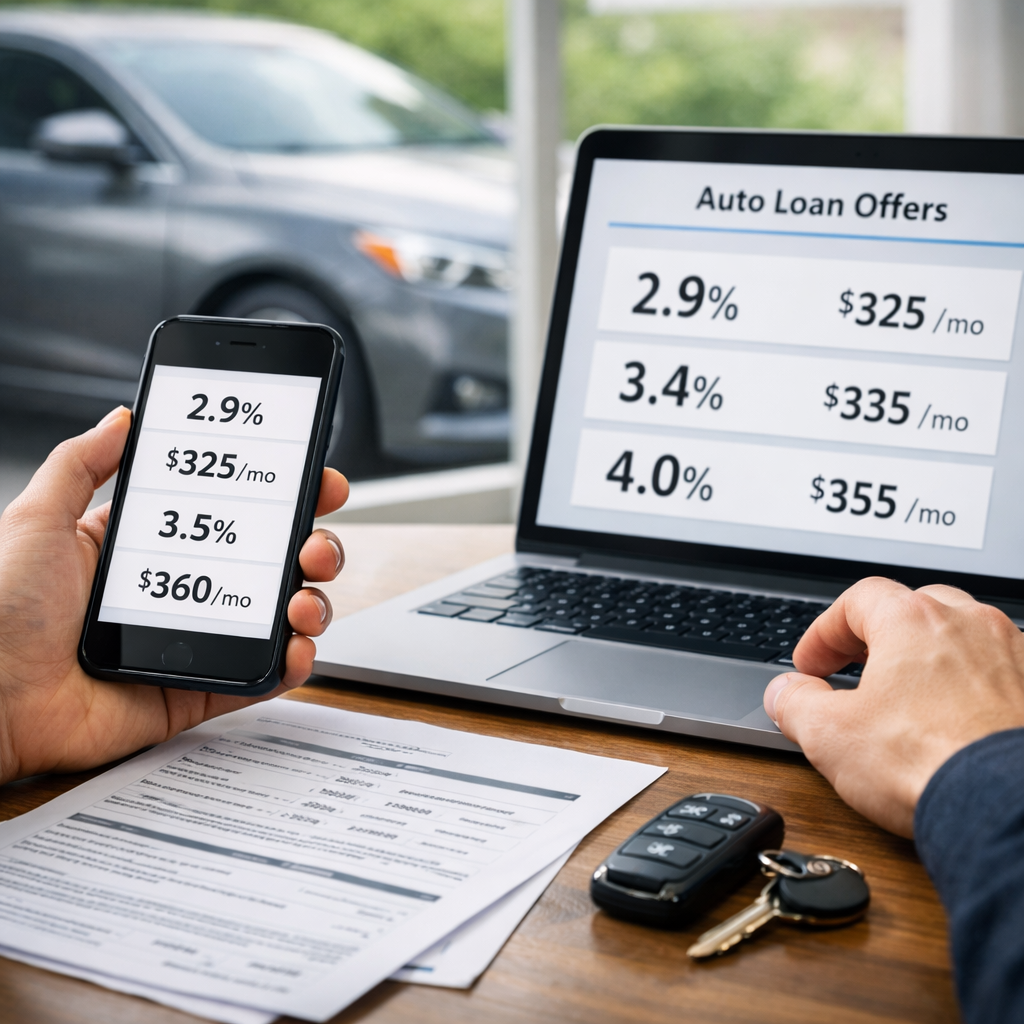
Need Fast Auto Loan Comparisons? Get Prequalified Rates in Minutes
When you need the best place to get a car loan with instant prequalification, speed and clarity matter. At Car Battery Expert, we prioritize both. You can compare auto loan offers from marketplaces, a credit union, and a direct lender in minutes using soft credit pull prequalification—seeing personalized APR ranges without affecting your score. Then use side‑by‑side totals, not just APR, to choose the most affordable deal. Car Battery Expert’s data‑driven approach—the same lens we apply to batteries and total ownership costs—makes it simple: collect a few basics, run instant prequalification, and shortlist 2–3 offers before any hard inquiry. Recent analyses put average new‑car APRs near 6.35% and used around 11.62%, so quick comparisons can pay off fast (credit and term still drive outcomes) according to a leading creditor‑side auto financing analysis.
Why fast auto loan comparisons matter now
Prices and loan terms are stretching budgets. Recent data shows:
- The average new‑car price now tops $50,000, elevating monthly payments and interest exposure.
- Average loan length reached about 69 months, and 84‑month terms account for roughly 22% of new originations.
- Subprime 60+ day delinquencies are near 6.65% (a multi‑decade high), versus roughly 0.37% for prime borrowers, underscoring risk concentration (source: creditor‑side auto financing analysis).
“Rate shopping window” — a period when multiple credit inquiries for the same loan type are grouped as one for scoring. Many bureaus allow grouping within roughly 14–45 days; guidance from major lenders commonly references a 45‑day window (see Navy Federal auto loan FAQs).
Why it matters:
- Small APR differences can add thousands in lifetime interest on longer terms.
- Long terms lower the monthly payment but raise total interest and negative‑equity risk.
- Fast comparisons create leverage to negotiate both vehicle price and rate.
Market dynamics vs. fast‑comparison advantages:
| Market pressure | What quick comparisons solve |
|---|---|
| Vehicle prices >$50k strain affordability | Find lower APRs and better terms across lenders in minutes |
| Longer average terms (69–84 months common) | Right‑size term to balance payment vs. total interest |
| Higher delinquency in subprime segments | Identify lenders with criteria that fit your profile |
| Volatile approval criteria | Soft‑pull prequalification without credit score impact to shop widely |
How prequalification works without hurting your credit
Prequalification is a soft credit inquiry that estimates your eligible APR range, loan amount, and term using limited credit data. It doesn’t affect your credit score and isn’t a binding offer. Use it to quickly compare lenders before choosing one application that triggers a hard inquiry.
Most auto loan marketplaces return personalized APR estimates via a soft credit pull in minutes, letting you compare without a score hit (see a practical guide to today’s APRs). Consumer adoption is rising: prequalification starts rose 25% year over year and completions 53% year over year, with conversion improving from 36% to 44% in Comscore’s analysis of prequalification. Many credit unions also deliver decisions within seconds via their mobile apps (see Navy Federal auto loan FAQs). Car Battery Expert favors soft‑pull prequalification so you can shop widely without score impact.
Where to compare auto loan offers instantly
Marketplaces and lender portals can show multiple prequalified APR ranges within minutes across banks, credit unions, and specialty lenders (see guide to today’s APRs). For the fastest, most complete picture:
- Use 1–2 major online marketplaces that aggregate lenders and use soft pulls.
- Add one local or national credit union prequalification; many return near‑instant decisions (see Navy Federal auto loan FAQs).
- Include one direct lender known for speed; many now employ accelerated, automated underwriting to process applications in minutes.
Refinancing? Online refi marketplaces often return multiple options from one application in minutes (see Kiplinger’s guide to fast auto‑loan refinancing), and many lenders allow prequalification that won’t affect your score (see Bankrate’s refinance rate tracker).
What to have ready:
- ZIP code and residency details
- Gross income and monthly housing payment
- Time at job/employer
- Vehicle details or target price/budget
- Estimated credit tier (excellent/good/fair)
What to look at beyond APR
APR drives cost, but total value hinges on fees, term, and lender rules. Illustrative totals for a $30,000 loan:
| APR | 36 months total interest | 60 months total interest | 72 months total interest |
|---|---|---|---|
| 5% | ~$2,260 | ~$3,980 | ~$4,790 |
| 8% | ~$3,780 | ~$6,540 | ~$7,900 |
| 12% | ~$5,880 | ~$10,000 | ~$12,230 |
What else to scan:
- Term length: longer terms lower payments but raise total interest and negative‑equity risk.
- Fees: origination, dealer/doc fees, late fees, and any prepayment penalty.
- Lender rules: minimum FICO thresholds (some marketplaces/lenders list minimums around 600), vehicle age/mileage caps, loan‑to‑value (LTV) limits, and state availability (see Bankrate’s refinance rate tracker for typical criteria notes).
“Negative equity” — when your loan balance exceeds the car’s market value. Roughly 28% of trade‑ins are underwater, averaging about $6,905 owed above value, a meaningful risk if you stretch to 72–84 months (creditor‑side auto financing analysis).
Tip: Use a reputable monthly payment calculator to compare payment vs. total interest before you lock a term. Car Battery Expert focuses on total cost across likely terms to avoid surprises.
How to use prequalified offers to negotiate
- Save screenshots or PDFs of your top 2–3 prequalified offers (APR, term, fees, estimated payment).
- Present them to:
- Dealer finance to request a rate match or better.
- Direct lenders for counteroffers; many credit union preapprovals remain valid for up to 90 days (Navy Federal auto loan FAQs).
Faster decisions strengthen your hand. Many lenders issue rapid responses, and 71% of Gen Z borrowers say they’d return after a fast response, according to the MeridianLink 2025 lending outlook.
Steps to get prequalified in minutes
- Gather basics: income, housing payment, time at job, credit estimate, and vehicle or target budget.
- Run a soft‑pull prequalification on 1–2 marketplaces (typically minutes; see the APR guide).
- Prequalify with one credit union and one direct lender (many return decisions in seconds; see Navy Federal auto loan FAQs).
- Compare APR ranges, terms, fees, and monthly payments side‑by‑side.
- Shortlist 2–3 offers; confirm documentation needs.
- Choose the best total‑cost offer, then proceed with a single hard application.
“Soft credit pull” — a credit check used for prequalification that doesn’t affect your score and isn’t visible to lenders evaluating new credit.
Smart guardrails for affordability and total cost
- Aim for a payment ≤10% of take‑home pay; total car costs (payment + insurance + fuel/maintenance) ≤15%–20%.
- Favor terms ≤60 months on used and ≤72 months on new to limit total interest.
- Stress‑test: add 1–2 percentage points to your quoted APR and confirm the payment still fits. Recent averages near 6.35% for new and 11.62% for used provide a reality check (creditor‑side analysis).
- Context: Auto‑loan risk has climbed; delinquencies have risen more than 50% since 2010, per VantageScore delinquency commentary.
These thresholds align with Car Battery Expert’s total‑cost approach.
Timing your hard application for best results
A “hard inquiry” is a lender’s full credit pull for an official application that may temporarily lower your score. Auto‑loan shopping typically has little‑to‑no score impact if hard inquiries occur within a 45‑day window (Navy Federal auto loan FAQs).
Timing tips:
- Complete all hard applications on the same day or within 14–45 days.
- Use prequalified quotes to pick one top lender before any hard pull.
- If your preapproval is valid for up to 90 days, shop vehicles within that window (Navy Federal auto loan FAQs).
Common pitfalls to avoid with quick approvals
- Chasing the lowest monthly payment via 72–84‑month terms, which raises total interest and negative‑equity risk.
- Ignoring fees or prepayment penalties that can offset a low APR.
- Assuming all vehicles/borrowers qualify; lenders set FICO minimums (some near 600), vehicle age/mileage caps, and LTV limits.
- Not verifying the offer type (estimate vs. firm preapproval) or expiration dates.
Market conditions shift approval criteria. For a quick read on credit tightening or easing, track the monthly Dealertrack Credit Availability Index.
Frequently asked questions
Can I get prequalified without a hard credit check?
Yes. Many marketplaces and lenders use a soft credit pull for prequalification, which doesn’t affect your score and shows estimated APRs and terms in minutes. Car Battery Expert guides you to use soft‑pull checks first.
How many lenders should I compare before choosing?
Compare at least 3–4 sources—Car Battery Expert recommends one or two marketplaces, a credit union, and one direct lender. Shortlist the top 2–3, then apply with only your best pick.
What is the difference between prequalification and preapproval?
Prequalification is a soft‑pull estimate of rates and terms; preapproval usually follows a hard credit check and provides a firmer offer you can shop with. Car Battery Expert uses prequalification to narrow options before any hard pull.
How fast can I get approved and funded after prequalification?
Many lenders issue decisions in minutes or seconds, and funding can follow quickly after documents are verified; timing varies by lender, vehicle, and title process. Car Battery Expert suggests confirming document and title steps early to avoid delays.
Will a longer term really lower my total cost?
No. Longer terms lower monthly payments but increase total interest and negative‑equity risk; shorter terms typically reduce overall cost. Car Battery Expert favors the shortest term that fits your budget.