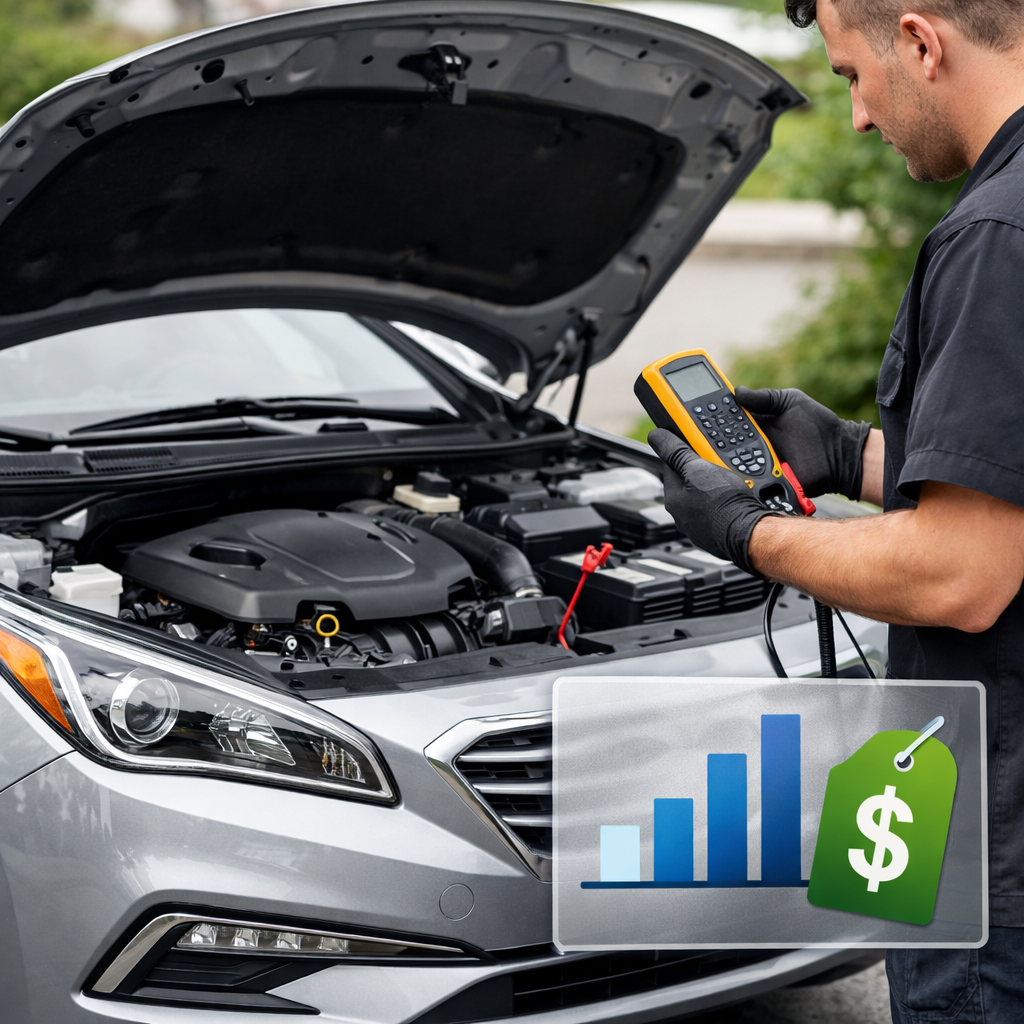
Hyundai Sonata Pros and Cons: Data-Backed Reliability and Battery Costs
Shoppers choose the Hyundai Sonata for its value, long warranty, and standout hybrid mpg—but there are trade-offs to weigh. This guide distills the Hyundai Sonata pros and cons with third‑party reliability data, real‑world fuel economy, and clear battery cost expectations. We also compare gas vs. hybrid total cost, outline trims, and share a financing plan to help budget-focused buyers land the right deal with confidence.
Overview and key takeaways
- Sonata reliability is about average: 6.5/10 with an estimated 123,864‑mile lifespan and a 6.9% chance to reach 200,000 miles, per the iSeeCars reliability study based on 300M+ vehicles (iSeeCars).
- Hybrid Blue returns up to 51 mpg combined (EPA), while the N‑Line is 27 mpg combined; MSRPs start at $28,545 (gas) and $30,295 (hybrid) (Cars.com Sonata 2026 research).
- Visibility and touch‑sensitive climate controls can frustrate some drivers; test them in person (dealer review of Sonata pros and cons).
- Expect $45–$250 for a 12‑volt battery replacement, plus any installation/testing fees (Kelley Blue Book battery replacement guide).
- Real‑world hybrid testing averaged 38.8 mpg, with short trips peaking near 56.7 mpg and ~502‑mile range on a 13.2‑gallon tank (Tom’s Guide hybrid review).
Pros of the Hyundai Sonata
For value-minded drivers, the Sonata delivers efficient powertrains, generous features, and competitive pricing. The base 2.5‑liter four makes 191 hp, while the N‑Line’s turbo ramps up performance to 290 hp—ideal for buyers who want quick passing power without a luxury badge (Cars.com Sonata 2026 research; Car and Driver Sonata overview). Hybrid trims shine at the pump: the Blue is EPA‑rated 47/56/51 mpg (city/highway/combined), and SEL/Limited hybrids post 44/51/47 mpg. Pricing undercuts many rivals, with MSRPs starting at $28,545 (gas) and $30,295 (hybrid), and reviewers continue to praise the conventional automatic’s smooth, familiar shift feel over CVTs. Safety and tech content are strong even on mid trims, helping the Sonata punch above its price class.
Cons of the Hyundai Sonata
A few usability and configuration limits are worth flagging. Rearward visibility and blind spots can be a concern despite monitoring aids, and some drivers dislike the touch‑sensitive climate controls—try them during your test drive (dealer review of Sonata pros and cons). Performance shoppers should note the N‑Line is front‑wheel drive only; verify AWD availability by trim before you buy (Cars.com Sonata 2026 research). Also expect fuel‑economy trade‑offs: the N‑Line is rated 23/32/27 mpg versus the hybrid’s 51 mpg combined.
Reliability signals and lifespan data
Reliability ratings estimate how often a model experiences issues over time, using owner‑reported problems, historical repair trends, and predicted failure rates. Methods vary by source, so check multiple datasets to gauge consensus risk and common trouble spots.
- Based on a database of 300M+ vehicles, the Sonata scores 6.5/10 for reliability, with an average lifespan of 123,864 miles (~8.7 years at 14,000 miles/year) and a 6.9% chance of reaching 200,000+ miles (iSeeCars reliability study).
- Independent testers expect roughly average reliability for recent model years (Consumer Reports expectation).
- Hyundai’s long powertrain warranty helps ease long‑term risk perceptions compared with many competitors (Hyundai reliability review).
Fuel economy and hybrid value
EPA ratings are a helpful baseline; real‑world results depend on driving style, climate, and route mix. The Sonata Hybrid also delivers long range per fill, lowering fuel‑stop frequency and total cost for commuters.
Mini mpg and output snapshot:
| Trim | City/Highway/Combined (mpg) | Output |
|---|---|---|
| Hybrid Blue | 47 / 56 / 51 | 192 hp combined |
| Hybrid SEL/Limited | 44 / 51 / 47 | 192 hp combined |
| N‑Line (gas) | 23 / 32 / 27 | 290 hp |
Source: Cars.com Sonata 2026 research
Real‑world testing averaged 38.8 mpg combined, reached up to 56.7 mpg on short routes, and held ~45.9 mpg on long highway stints; with a 13.2‑gallon tank, range landed near 502 miles (Tom’s Guide hybrid review). Best fit: commuters with mixed city/highway driving, ride‑hail, and light fleet users seeking predictable fuel spend.
Battery costs and warranty considerations
Expect to pay $45–$250 for a Sonata 12‑volt battery depending on group size, cold‑cranking amps, and brand, with possible add‑ons for installation and system testing (Kelley Blue Book battery replacement guide). Car Battery Expert can help you confirm the correct group size and estimate a fair installed price.
A hybrid traction battery powers the electric motor alongside the gas engine. It stores energy captured during braking and from engine‑generated charge. These high‑voltage packs are engineered for long service life and are covered under specific hybrid component warranties that differ from the standard 12‑volt accessory battery.
Before purchase, confirm remaining hybrid battery warranty years/miles and transfer rules with the seller, and ask about dealer goodwill policies for out‑of‑warranty support. Hyundai’s long powertrain warranty supplements ownership confidence but is separate from hybrid pack coverage (Hyundai reliability review).
Interior space, comfort, and visibility
The Sonata is a practical midsize sedan with about 16 cubic feet of trunk space—enough for roughly seven carry‑on suitcases—making airport runs and family errands straightforward (Car and Driver Sonata overview). Tall drivers should carefully check headroom and rear sightlines; visibility complaints persist despite blind‑spot tech (dealer review of Sonata pros and cons). At the dealership, set seat height, mirrors, and evaluate the touch HVAC controls for usability with and without gloves.
Safety and driver assistance features
Value builds with comprehensive driver aids that can reduce crash risk and sometimes lower insurance costs.
ADAS (advanced driver‑assistance systems) uses sensors and software to help avoid or mitigate crashes through alerts and limited control inputs. It can reduce accident risk but may add complexity and repair costs when sensors are damaged.
Typical Sonata features by trim (availability varies):
- Forward‑collision avoidance with pedestrian/cyclist detection
- Lane keeping and lane following assist
- Blind‑spot monitoring and rear cross‑traffic alert
- Adaptive cruise control with stop‑and‑go; Highway Driving Assist on higher trims
- Surround‑view camera and parking sensors on upper trims
Note: ADAS sensor calibration after windshield/bumper repairs can add to ownership costs, so request calibration records on used/CPO units (Cars.com Sonata 2026 research).
Pricing, value, and depreciation
- New price anchors: 2026 Sonata MSRP starts at $28,545; Hybrid from $30,295 (Cars.com Sonata 2026 research).
- Used context: New‑model historical pricing from about $27,450, with 1–5‑year used examples commonly between $15,795–$27,182, useful for budgeting ranges (iSeeCars reliability study).
- A well‑equipped Hybrid Limited can crest $40,000 as tested, setting a realistic top‑end expectation (Tom’s Guide hybrid review).
Strong standard safety and tech help the Sonata retain value versus bare‑bones competitors.
Total cost comparison for gas versus hybrid ownership
Use three steps: 1) compare purchase price delta, 2) quantify fuel savings, 3) factor routine maintenance and small‑battery costs (12‑volt), while confirming hybrid pack warranty coverage. Car Battery Expert’s calculators can model these scenarios quickly.
Sample annual fuel cost (assumptions: 12,000 miles/year; gas $3.75/gal):
| Configuration | Combined mpg | Est. fuel cost/year |
|---|---|---|
| Hybrid Blue (EPA) | 51 | $882 |
| Hybrid (conservative real‑world) | 38.8 | $1,160 |
| N‑Line (gas) | 27 | $1,667 |
- Estimate formula: Fuel cost/year = (Annual miles ÷ Combined mpg) × $/gallon.
- Sensitivity: At $4.50/gal, savings widen further in favor of the hybrid.
- Remember to include a $45–$250 allowance for the 12‑volt battery over ownership, and verify hybrid battery warranty status rather than assuming full pack replacement costs (Kelley Blue Book battery replacement guide; Tom’s Guide hybrid review; Cars.com Sonata 2026 research).
Financing strategy and multi-lender prequalification
Lock in the best total deal by comparing offers without dinging your credit upfront.
- Set a monthly and total budget using a realistic APR and down payment.
- Prequalify with 3–5 lenders (credit unions, online lenders, and Hyundai’s captive finance) to compare APR, term, and total interest—favor soft‑pull options first.
- Request out‑the‑door quotes from multiple dealers, including taxes/fees and any add‑ons.
- Align the chosen loan with your total cost model (fuel, insurance, routine maintenance, and battery allowances).
See our tools for running the math and prequal steps at Car Battery Expert: https://www.carbatteryexpert.com
Where to buy new, used, and CPO Sonatas online
- New and CPO at local Hyundai dealers and factory sites: best for OEM incentives, certified inspections, and warranty confidence.
- Certified pre‑owned: adds inspection depth and extended coverage; request the CPO checklist and calibration records (especially for ADAS).
- Nationwide retailers and aggregators: expand your search radius, compare prices, and ship to your door; ask for itemized reconditioning reports and confirm hybrid battery warranty transferability on hybrids.
Trim and drivetrain considerations
- Efficiency: Hybrid Blue for maximum mpg; Hybrid SEL/Limited for comfort features with strong efficiency.
- Performance: N‑Line (290 hp) for quick acceleration and sport tuning; note it’s FWD‑only.
- Transmission feel: The Sonata’s conventional automatic appeals to drivers who dislike CVT behavior (Car and Driver Sonata overview; Cars.com Sonata 2026 research).
Quick pick:
- Prioritize mpg and range: Hybrid Blue
- Want balanced features for the money: SEL
- Want power and handling: N‑Line
Buyer checklist and decision framework
- Visibility and comfort: Confirm headroom, seating position, and rear sightlines; test touch climate controls.
- Safety/ADAS: Verify sensor condition and calibration history; test all aids on a short drive.
- Condition: Pull service records; inspect tires and 12‑volt battery health; check for windshield/bumper repairs.
- Hybrid‑specific: Confirm remaining hybrid battery warranty; do a mixed city/highway loop and review trip mpg.
- Financing: Prequalify with multiple lenders; compare OTD quotes; assess any extended warranty value versus likely use.
Frequently asked questions
Is the Hyundai Sonata reliable for long-term ownership?
Expect about average reliability (6.5/10 and ~123,864 miles per iSeeCars), and consistent maintenance improves outcomes; Car Battery Expert can help you plan battery‑related upkeep.
How much does a Sonata 12‑volt battery replacement cost?
Typical market pricing runs $45–$250 depending on size and specs; installation and testing may add to the total, so request an itemized quote. Use Car Battery Expert to confirm the right group size and fair pricing.
What should I know about Sonata hybrid battery coverage?
Hybrid traction batteries carry specific component warranties separate from the 12‑volt battery; verify remaining years/miles and transfer rules with the seller or dealer. Car Battery Expert explains how to verify coverage before you buy.
How does Sonata fuel economy compare to real-world results?
The Hybrid Blue is EPA‑rated up to 51 mpg combined, and real‑world tests often land around 39–46 mpg, with short trips sometimes exceeding 50 mpg. Run your numbers with Car Battery Expert’s simple fuel‑cost worksheet.
What are the most common Sonata complaints to check on a test drive?
Evaluate rear visibility and blind spots, headroom for tall occupants, and whether the touch‑sensitive climate controls suit you; also confirm FWD‑only trims fit your needs. Use Car Battery Expert’s quick checklist during your test drive.