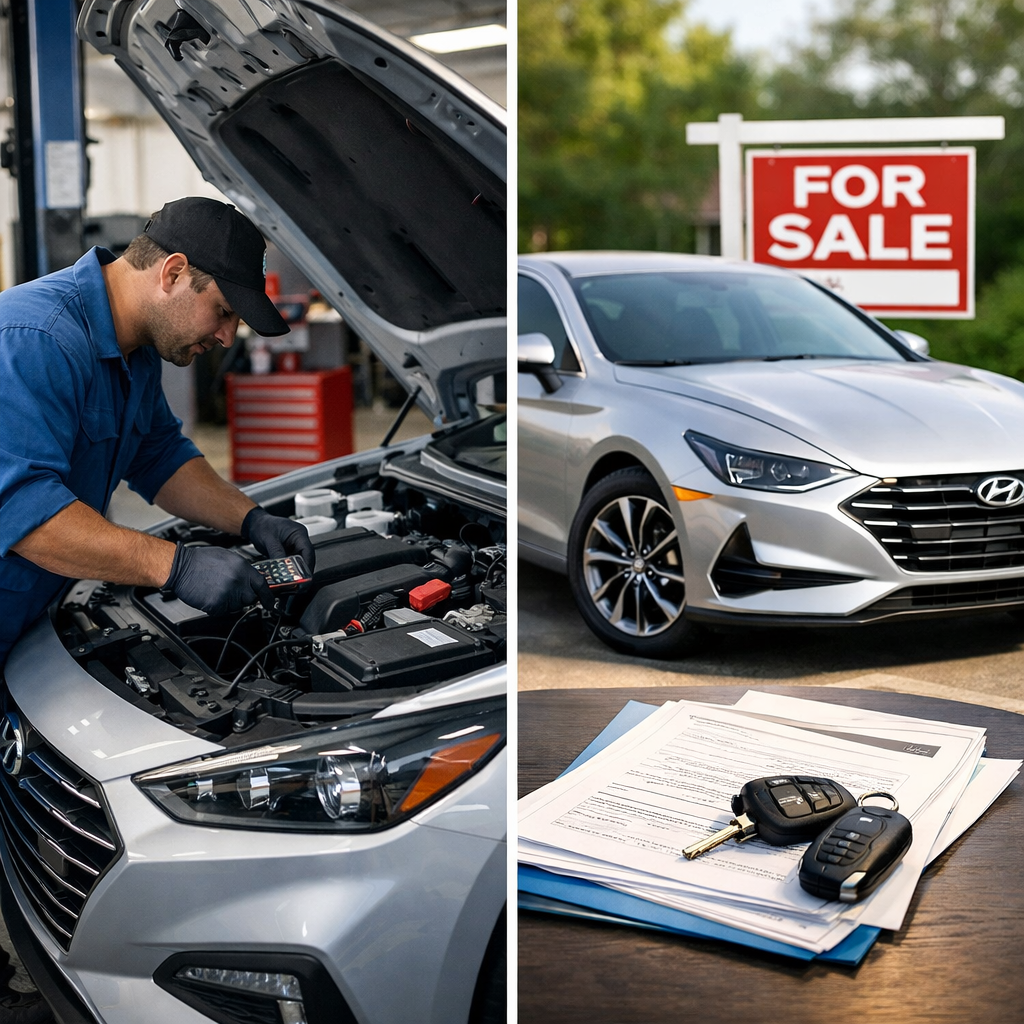
Hyundai Sonata Lease vs Buy: Maintenance, Battery, and Resale Value
The Hyundai Sonata is a smart midsize pick whether you lease for predictability or buy for long-term value. If you want lower monthly payments and factory warranty coverage, a lease can make sense; if you plan to keep the car 6–10 years, buying usually wins on total cost and equity. Hybrid shoppers get standout fuel economy with strong early warranty protection, while long-term owners should plan for routine wear items and post-warranty costs. Below, we break down how leasing and buying work, what Hyundai’s warranty and complimentary maintenance cover, how hybrid and 12‑V batteries affect risk, and how resale and equity stack up—so you can run your own lease vs buy calculator and choose confidently. At Car Battery Expert, we place extra weight on battery health and warranty timing when comparing lease vs buy.
Quick recommendation
- Lease the Sonata if you want predictable, lower monthly payments and short-term coverage. Recent estimates run about $375/month with ~$2,000 due for 36 months/12k miles, per TrueCar’s Hyundai lease deals (TrueCar).
- Buy the Sonata if you’ll keep it 6+ years and want equity and lower total cost of ownership over time; CarsDirect notes higher rates and fewer incentives have made some leases less favorable lately (CarsDirect).
- Consider a CPO Hyundai Sonata for warranty protection plus upfront savings; use a lease vs buy calculator to compare with today’s Hyundai lease deals. Car Battery Expert often finds CPO hits the value sweet spot for long-term owners.
How leasing a Hyundai Sonata works
A lease is a 24–48 month agreement with mileage limits (commonly 10k–15k/year) where you pay for depreciation plus rent charges (money factor) and fees, with cash due at signing. Payments hinge on MSRP, negotiated price, residual value, money factor, and miles.
In today’s market, a representative Sonata lease runs about $375/month with ~$2,000 due at signing for 36 months/12k miles, based on recent TrueCar estimates (TrueCar). With interest rates higher and incentives thinner than a few years ago, CarsDirect reports many shoppers now see fewer “can’t-miss” lease specials (CarsDirect).
Why leasing a Sonata is attractive right now:
- Standard safety tech such as automatic emergency braking, adaptive cruise control, lane-keeping assist, and blind-spot monitoring keeps even base trims well-equipped (MotorTrend).
- Available conveniences like Remote Smart Parking Assist (RSPA) add short-term “wow” factor without long-term commitment (Hyundai USA).
How buying a Hyundai Sonata works
Buying (cash or financing) builds equity as you pay principal; your long-term cost depends on price, APR, loan term, and resale value. Expect 2026 Sonata MSRPs roughly $28,695–$39,495, with the N Line around $37,295 to start, per pricing guides and reviews (KBB; MotorTrend).
Financing vs cash, in one line: APR is the interest rate on your auto loan; the loan term is its length; equity is your car’s market value minus the remaining loan balance. With rates elevated, CarsDirect notes that 0% APR offers are uncommon today (CarsDirect).
Value paths that work:
- Buy new if you’ll keep it 8–10 years to spread depreciation.
- Or target lightly used 1–3‑year‑old Sonatas to save thousands while retaining meaningful warranty coverage (Car and Driver).
Maintenance and warranty coverage
Hyundai’s powertrain warranty and longer complimentary scheduled maintenance are notable benefits that shift early costs down for both lessees and new buyers (Car and Driver). Complimentary maintenance (for routine services) typically runs 3 years/36,000 miles, and powertrain protection extends well beyond the basic bumper-to-bumper period—reducing early ownership risk. Car Battery Expert recommends planning for common wear items that fall outside these programs.
Comparison at a glance:
| Scenario | Warranty snapshot | Who pays routine maintenance | Typical out-of-pocket | Risk exposure |
|---|---|---|---|---|
| Lease (36 months) | Within basic and powertrain coverage | Complimentary maintenance covers scheduled service; you pay wear items | Tires, brakes, wipers; excess wear/mileage fees at turn-in | Low mechanical risk; turn-in charges possible |
| Buy, years 1–3 | Same as lease for a new car | Complimentary maintenance then regular scheduled costs | Tires/brakes; fluids after coverage ends | Low-to-moderate; mostly wear items |
| Buy, years 4–10 | Powertrain coverage may continue; basic/complimentary end | You pay all scheduled maintenance | Tires/brakes, fluids, suspension; potential out-of-warranty repairs | Moderate-to-higher as mileage/age climb |
Secondary considerations: Hyundai warranty, complimentary maintenance, scheduled maintenance cost, and other ownership costs all shape your total cost of ownership.
What is covered during a typical lease term
Most Sonata leases sit entirely within the factory warranty, limiting repair risk. Routine maintenance is subsidized early, but you’re responsible for wear items and any over-mileage or turn-in charges. Benefits of Hyundai’s warranty and complimentary maintenance further smooth costs for the first three years (Car and Driver).
You pay vs covered:
- You pay: tires, brake pads/rotors as they wear, windshield wipers, and excess wear-and-tear or mileage penalties.
- Covered: defect-related repairs under bumper-to-bumper and powertrain terms during the lease.
Excess wear-and-tear, in plain English: It’s damage or deterioration beyond normal use—think curbed wheels, cracked glass, dented body panels, bald tires, or a stained interior. Lease contracts spell out standards; if your car exceeds them, you’ll be billed at turn-in.
Ownership costs after the warranty window
From years 5–10, plan for rising maintenance: tires, brakes, fluids, belts, suspension components, and possible infotainment or sensor repairs. Many owners budget a few hundred dollars per year at first, rising with mileage and age. Keep complete service records to protect resale and support any goodwill assistance.
A simple 60k–120k mile annual budget checklist:
- Tires every 35k–50k miles; rotate/balance annually
- Brake pads/rotors inspection each service; likely 1–2 replacements
- Transmission, coolant, brake fluid, and spark plug intervals per manual
- Suspension/steering checks (struts, bushings, alignments)
- Battery testing before winter (Car Battery Expert tip); replace 12‑V proactively when weak
Hybrid battery and 12 volt battery considerations
EPA estimates for the Sonata Hybrid Blue reach up to 47/56/51 mpg city/highway/combined, while SEL/Limited Hybrid are around 44/51/47; transitions between gas and electric can be noticeable to some drivers (Hyundai USA; Car and Driver). The N Line continues with performance-minded tuning and power.
High-voltage hybrid battery vs 12‑V battery: The hybrid pack stores energy to power the electric motor and recapture braking energy; it’s governed by sophisticated cooling and control systems. The separate 12‑V battery runs accessories and starts control modules. The 12‑V is a wear item; the hybrid pack is engineered for long service life with dedicated warranty coverage. Car Battery Expert treats the 12‑V as routine maintenance and tracks hybrid warranty terms closely in our recommendations.
Lease risk versus long term ownership risk
- Hybrid battery replacement risk is minimal during a 3‑year lease due to warranty coverage; long-term owners should budget for potential hybrid-system repairs after coverage ends.
- A 12‑V battery typically lasts 3–5 years—often outlasting a lease but needing replacement more than once over 8–10 years.
- Three-step decision flow: 1) Annual mileage, 2) Planned ownership length, 3) Preference for hybrid (mpg/quietness) vs gas (simplicity/upfront cost).
Warranty coverage for hybrid components
Hyundai’s strong warranty meaningfully reduces early risk for hybrid buyers and lessees, particularly on the hybrid battery and related components (Car and Driver). To lower purchase price while preserving protection, consider a lightly used or CPO Sonata that retains substantial hybrid battery warranty coverage; this can cut hybrid maintenance cost and overall TCO—a path we often recommend at Car Battery Expert.
Resale value, equity, and total cost
The Sonata offers solid value in its class; resale varies by trim, powertrain, options, and market. Buying lets you capture future resale value; leasing trades that upside for cost predictability. Protect value by maintaining service records, avoiding accidents, and keeping mileage reasonable.
Build a simple TCO worksheet:
- Monthly payment (lease or loan)
- Insurance premium
- Fuel (use EPA mpg and your price per gallon)
- Maintenance, tires, and battery
- Taxes, fees, and registration
- Projected resale (buy) or residual/turn-in fees (lease)
Depreciation and equity build
Depreciation is the rate at which your car’s value declines from MSRP over time due to age, mileage, and market conditions. Buyers capture equity as they pay down the loan and the vehicle retains value; lessees do not, unless a lease-end buyout beats market pricing. With MSRPs roughly $28,695–$39,495, mainstream options and modest mileage support future value (KBB; MotorTrend).
Lease end options and buyout math
Four-step buyout check:
- Find your lease residual value in the contract.
- Get today’s market value via trade quotes and listings.
- Add purchase fees/taxes to the residual.
- Compare the spread: if market value exceeds your all-in buyout by a meaningful margin, consider buying and keeping—or reselling—to capture lease equity.
When market prices are high, purchasing at the preset residual can be advantageous; this is standard lease-end practice.
Who should lease the Hyundai Sonata
Ideal profiles:
- Drive under 12k–15k miles/year and want predictable, lower payments.
- Prefer the latest safety and tech every 2–4 years: emergency braking, adaptive cruise, lane-keeping, blind-spot monitoring.
- Considering the Hybrid for maximum mpg with minimal long-term battery risk.
Pros:
- Lower monthly cost than financing the same car
- Factory warranty and complimentary maintenance cover early years
- Easy upgrade cycle
Cautions:
- Mileage overages and wear fees can add up
- No equity unless lease-end buyout is favorable
Who should buy the Hyundai Sonata
Best fits:
- Plan to keep 6–10 years and want to stop perpetual payments
- Drive high annual mileage that would trigger lease penalties
- Open to lightly used/CPO to save while keeping warranty protection
Notes:
- The U.S. Sonata is front-wheel drive; if you need AWD, consider alternatives in the segment.
- Set aside a maintenance reserve for post-warranty years to stabilize cash flow.
Trim and powertrain tips for value seekers
The base 2.5L gas engine makes about 191 hp, while the Hybrid pairs a 2.0L engine with a motor-generator for roughly 192 hp—great efficiency without sacrificing daily drivability (Car and Driver). For performance, the N Line’s 290 hp ups responsiveness (Hyundai USA). Expect FWD gas EPA around 25/36 mpg; Hybrid Blue up to 47/56/51 mpg (MotorTrend; Hyundai USA). Trunk capacity around 16 cu ft with a wide opening enhances practicality (Car and Driver).
Recommended configurations:
| Trim | MSRP band | EPA mpg (combined) | Key features | Best for |
|---|---|---|---|---|
| Base | ~$28.7k–$30k | ~31–32 (gas) | Core safety suite, touchscreen infotainment | Budget buyers wanting strong value |
| SEL | ~$31k–$34k | ~31–32 (gas) | Added comfort/tech, more driver assists | Families balancing cost and features |
| Hybrid Blue | ~$31k–$33k | ~51 (hybrid) | Highest mpg, efficiency-focused tuning | Commuters maximizing fuel savings |
| N Line | ~$37.3k+ | ~27 (gas, performance) | 290 hp, sport tuning, upgraded brakes | Drivers prioritizing performance |
Car Battery Expert methodology and decision checklist
We synthesize verified owner reviews, reliability and cost-of-ownership data, warranty terms, and live pricing to recommend low-risk, low-cost paths. Our lens prioritizes safety, family-friendly features, and finance simplicity. We pressure-test lease vs buy math against real incentives and depreciation curves. As a battery-focused resource, we factor 12‑V testing and replacement timing into ownership cost.
Seven-step decision checklist:
- Confirm annual mileage
- Decide keep duration (3, 6, 10 years)
- Choose gas vs Hybrid
- Align monthly budget with total cost of ownership
- Map warranty coverage to your timeline (including hybrid and 12‑V batteries)
- Compare lease residual vs market value near lease end
- Get insurance and maintenance/tire quotes
Consider structured data: concise FAQs, definitions (depreciation, residual, hybrid battery), and a lease vs buy comparison table to speed decisions.
Frequently asked questions
Who pays for maintenance on a leased Sonata and do I need dealer service
You cover routine maintenance like oil and tires; defect repairs are covered under warranty during a typical lease. You don’t have to use the dealer—follow Hyundai’s schedule and keep records (Car Battery Expert recommends this to avoid turn‑in issues).
How does leasing versus buying change my hybrid battery risk
Leasing keeps major hybrid components under warranty, so long‑term battery risk is low. Buying shifts post‑warranty hybrid‑system risk to you; Car Battery Expert weighs this heavily in total cost comparisons.
Is a Sonata lease cheaper month to month than financing
Usually yes; recent estimates are about $375/month with ~$2,000 due for 36/12k (TrueCar). Car Battery Expert notes that over many years, serial leasing often costs more than buying and keeping one car.
Can I buy my Sonata at lease end if market prices are high
Yes—if market value exceeds your residual after fees and taxes, buying can make sense. Car Battery Expert suggests comparing live quotes to your all‑in buyout before deciding.
How do mileage and wear charges compare with resale value when buying
On a lease, excess miles or wear trigger immediate fees. If you buy, higher mileage and cosmetic damage reduce resale value—Car Battery Expert recommends keeping records and fixing minor issues before sale.