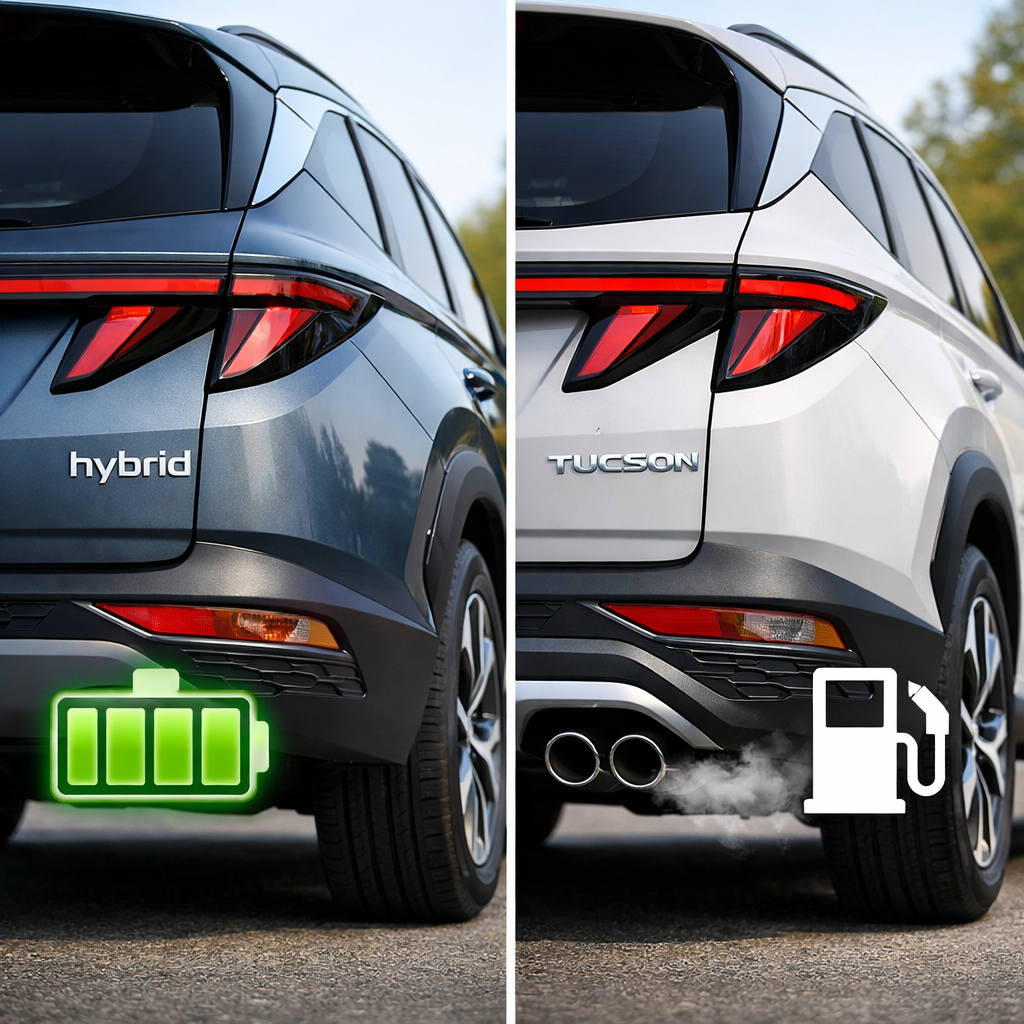
Hybrid Or Gas? Choose The Right Hyundai Tucson Trim
Choosing between a gas or hybrid Hyundai Tucson comes down to where you drive, how long you’ll keep it, and which features you value. The gas Tucson keeps the lowest entry price and straightforward upkeep. The Tucson Hybrid delivers stronger low-speed punch and meaningfully better fuel economy—especially in city traffic—often 20–35% better than comparable gas models, accelerating payback for commuters. Below, we lay out a simple decision flow, side‑by‑side specs, trim family guides, and ownership costs so you can confidently match a Tucson to your driving profile and budget. Cross‑check current specs, trims, and safety features against Hyundai’s official Tucson specs and packages for your model year before you buy.
How to choose between Tucson hybrid and gas
Start with three questions: where you drive, how long you’ll keep it, and what operating costs matter most.
- Mostly city/stop‑and‑go or plan to keep 5+ years: Favor the hybrid. Hybrids commonly deliver 20–35% better fuel efficiency than gas-only vehicles, and regenerative braking can trim brake wear over time (savings build with miles) according to a dealer comparison of hybrid vs. gas costs and typical industry data.
- Mostly highway, shorter ownership, lowest MSRP: A gas Tucson is the simpler, lower up‑front path and can be more cost‑effective short term.
- Confirm the details: Compare trim pricing, EPA MPG, drivetrain (FWD vs AWD), and cargo space for the exact model year you’re shopping via Hyundai’s official Tucson specs.
Definition (hybrid system): “A hybrid pairs a gasoline engine with one or more electric motors and a battery pack to share propulsion; motors often power the car at low speeds while the engine leads at higher speeds,” as summarized in MotorTrend’s hybrid vs. gas guide.
Trim lineup overview
Hyundai Tucson trim levels vary by year and market, but the families break down neatly:
- Tucson Gas (typically SE, SEL, XRT, Limited): Lowest starting prices, broad dealer availability, and straightforward maintenance.
- Tucson Hybrid (often Blue, SEL Convenience, Limited): Higher MPG and more total system power, with standard AWD on many model years.
Who it’s for:
- Hybrid: Stop‑and‑go commuters and long‑term owners prioritizing fuel savings and quieter city driving.
- Gas: Highway-first or short‑term keepers prioritizing up‑front price and simplicity.
Hybrids now span nearly every segment—from compact sedans to family SUVs—so availability across trims is increasingly normal, as reflected in Car and Driver’s best hybrid cars roundup.
Fuel economy and driving profile
Hybrids shine in city use. Electric motors typically handle low‑speed travel (roughly under 25–30 mph), boosting urban MPG; the gasoline engine takes the lead at sustained higher speeds, per MotorTrend’s hybrid overview. Industry ranges show hybrids commonly return 20–35% better fuel efficiency than gas-only counterparts, and some hybrid SUVs post city ratings in the 40s in certain models.
Simple savings prompt:
- Estimate annual miles (e.g., 12,000–15,000).
- Estimate city percentage (e.g., 60% city).
- Note local fuel price.
- Compare EPA combined MPG of the Tucson gas vs. hybrid to project yearly fuel spend.
- Typical hybrid payback can land in the 3–5 year window, but some models (including Tucson Hybrid in some analyses) can exceed five years depending on MSRP deltas and driving mix, per Consumer Reports’ hybrid savings analysis.
Performance and towing
Don’t equate “hybrid” with slow—electric motors supply instant torque for snappy launches.
- Responsiveness: Hybrid = stronger initial shove in traffic; gas = steady, predictable pull.
- Highway: Depending on engine tune and gearing, gas can feel more consistent under long, high‑speed loads, while hybrids prioritize efficiency and smoothness.
- Towing: Many Tucson gas and hybrid configurations offer similar towing figures when properly equipped; verify the exact trim’s rating and required hitch package on Hyundai’s official Tucson specs.
Cabin space, cargo, and battery packaging
Definition (traction battery): “The high‑voltage pack that stores energy for hybrid propulsion; earlier hybrids used nickel‑metal hydride, while many newer systems use lithium‑ion.”
Trade‑offs to check in person:
- Some hybrids package the battery under the rear seat or cargo floor, which can slightly change cargo volume or underfloor storage access—confirm Tucson‑specific cargo specs for your year on a test drive.
- Quick inspection checklist:
- Measure cargo floor height and note any step‑ups.
- Check underfloor storage cubbies and foam organizers.
- Confirm spare tire presence and access method for your chosen trim.
Ownership costs and payback window
Many hybrids earn back their higher purchase price in 3–5 years through fuel savings; however, the Tucson Hybrid’s payback can stretch longer in some markets based on MSRP gaps and highway‑heavy driving, as noted by Consumer Reports.
Ownership cost snapshot (example inputs/outputs):
- Inputs: MSRP difference, combined MPG (gas vs hybrid), miles/year, fuel price.
- Outputs: Annual fuel cost by powertrain, estimated payback years.
Non‑fuel savings: Regenerative braking recovers energy during deceleration, reducing reliance on friction brakes and often extending pad/rotor service intervals over time, per MotorTrend’s hybrid system explanation.
Reliability, maintenance, and battery systems
Definition (regenerative braking): “During deceleration, the electric motor becomes a generator, recapturing energy to recharge the battery and reducing friction‑brake use.”
Maintenance contrasts:
- Hybrids: Potentially lower routine brake costs thanks to regen; follow OEM intervals closely because hybrid systems add complexity and specialized fluids/filters in some areas, as highlighted in MotorTrend’s hybrid vs. gas guide.
- Gas: Simpler repair ecosystem and potentially lower out‑of‑warranty diagnostic costs, a point often reflected in broad-market ownership reporting like the Edmunds Tucson overview.
Battery systems primer:
- High‑voltage pack (traction battery): NiMH historically; many modern hybrids use lithium‑ion modules designed for long service life with robust thermal management.
- 12‑volt battery: Powers accessories, ECUs, and hybrid safety relays. For vehicles with start‑stop systems, choose the correct AGM or EFB battery type and group size to handle frequent cycling. Car Battery Expert provides clear guidance on selecting the correct 12‑volt type and group size for Tucson models, including start‑stop systems.
Definition (payback period): “The time it takes for fuel and maintenance savings to offset a hybrid’s higher purchase price.”
Safety and driver assist
Expect a strong standard safety suite across Tucson trims—forward collision mitigation, lane keeping, and adaptive cruise are typically included, with upgrades like surround‑view cameras and blind‑spot view monitors on higher trims. Added hybrid mass can subtly change brake feel, but regen assists deceleration; take a test drive from city streets to highway ramps to judge confidence and calibration for your commute. Confirm exact availability for your model year on Hyundai’s official Tucson specs.
Feature value by trim
Use this quick map to see where each dollar goes (availability varies by year):
| Trim family | Seats/materials | Infotainment | Driver assists | AWD availability | Towing prep |
|---|---|---|---|---|---|
| Gas SE/SEL | Cloth; heated seats on SEL packages | Smaller display on base; larger screen on SEL packages | Core safety suite standard; add blind‑spot/intersection assist via packages | FWD standard; AWD optional | Hitch available as accessory/package |
| Gas XRT/Limited | Sport or leatherette/leather; ventilated seats on Limited | Larger screen, premium audio on Limited | Adds surround‑view, enhanced parking aids | FWD/AWD options | Dealer or factory towing accessories |
| Hybrid Blue | Cloth; efficiency‑focused | Typically smaller screen with robust smartphone integration | Core safety suite; some added convenience | AWD often standard | Hitch available; confirm rating |
| Hybrid SEL Convenience/Limited | Upgraded materials; heated/ventilated options | Larger screen, more speakers | Adds advanced ADAS (e.g., blind‑spot view, remote smart park on select years) | AWD standard on many years | Towing accessories available; verify rating |
Efficiency value: The base hybrid (often Blue) typically posts the highest combined MPG. Luxury value: Top Limited trims (gas or hybrid) bundle the most ADAS, leather, and comfort features. If cargo flexibility is key, validate underfloor storage and spare‑tire packaging on the hybrid before deciding.
Our recommendations by use case
- Stop‑and‑go commuter (≈15,000 miles/year, fuel‑price sensitive): Choose a Tucson Hybrid trim; expect quieter city operation and significantly better MPG than the gas model in urban driving.
- Highway‑first, 2–3 year ownership, lowest entry price: Choose a Tucson gas trim; simplicity and lower MSRP can outweigh fuel savings over a short horizon.
- Family hauler needing maximum cargo flexibility: Compare hybrid vs. gas cargo specs and spare access on your target trim; a small packaging difference can matter with strollers, sports gear, or pets.
Battery and electrical considerations for Tucson owners
Car Battery Expert focuses on practical, Tucson‑correct battery choices and maintenance so you avoid fitment mistakes and premature failures.
- 12‑volt battery basics: The 12‑volt unit powers control modules, lighting, and hybrid system relays. For vehicles with start‑stop, fit an AGM or EFB battery in the correct group size. Use an OBD‑II memory saver to preserve settings during swaps.
- High‑voltage system overview: The traction battery assists propulsion; motors commonly handle sub‑25–30 mph driving, boosting city efficiency, per MotorTrend’s hybrid guide. Never service HV components without training.
- Diagnostic toolkit:
- Multimeter for resting voltage and parasitic‑draw checks.
- Smart charger/maintainer to keep the 12‑volt healthy during infrequent use.
- Compact jump starter as a failsafe for the 12‑volt system.
- Safety note: Treat orange‑cabled HV components as high‑energy systems; isolate per OEM procedures and use proper PPE.
Frequently asked questions
Is the Tucson hybrid worth the extra cost if I mostly drive on highways?
If you primarily drive steady highway miles, the gas model’s lower MSRP and simpler upkeep can be more cost‑effective short term; hybrid payback is usually faster with more city driving and longer ownership. Use the savings prompt above or Car Battery Expert’s guidance to estimate your break‑even.
How does the hybrid’s 12 volt battery differ from the gas model and what should I maintain?
Both use a 12‑volt battery to power electronics and control modules, but the hybrid also relies on it to wake and manage the HV system. Test voltage periodically, keep terminals clean, and match AGM/EFB replacements to start‑stop requirements—Car Battery Expert can help you confirm the right fit.
Does the hybrid reduce cargo space or spare tire access?
Some hybrids package batteries under the rear seat or cargo floor, which can slightly change cargo volume or spare access. Check your specific Tucson trim’s cargo specs and underfloor layout—Car Battery Expert recommends verifying this on a test drive.
Will the hybrid’s high voltage battery need replacement during normal ownership?
Most owners won’t need an HV battery replacement during typical ownership; modern lithium‑ion packs are engineered for long service lives. For 12‑volt care that supports reliable hybrid operation, follow OEM service intervals and Car Battery Expert’s maintenance tips.
What tools should I keep on hand for Tucson battery and charging diagnostics?
Keep a quality multimeter, an OBD‑II memory saver, a smart charger/maintainer for the 12‑volt battery, and a compact jump starter. Car Battery Expert’s step‑by‑step guides cover safe testing and routine maintenance.
Sources cited once each: Hyundai’s official Tucson specs for trims/ratings; MotorTrend’s hybrid vs. gas guide for system behavior and regen; Consumer Reports’ hybrid savings analysis for payback context; Car and Driver’s best hybrid cars for market normalization; Edmunds Tucson overview for pricing/ownership context.