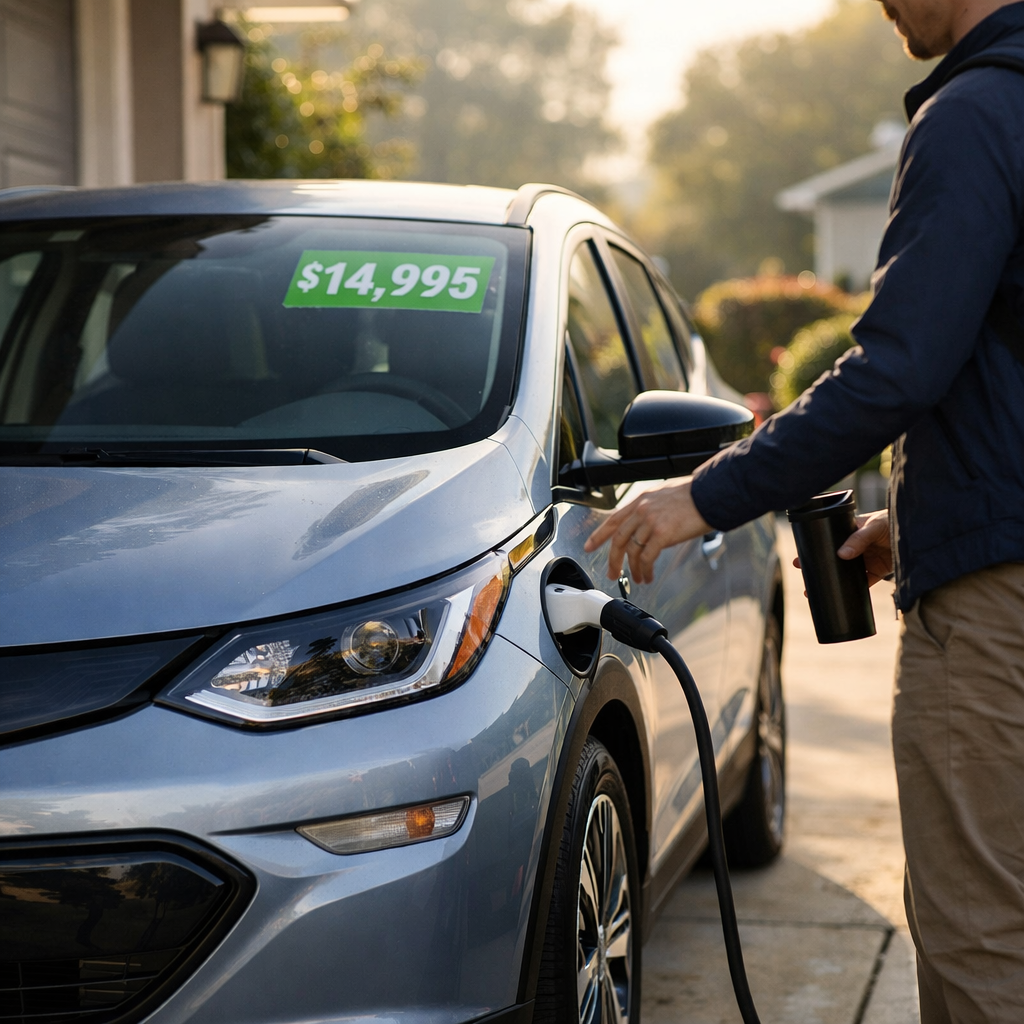
How to Choose a Budget-Friendly 2020+ Used Electric Car for Commutes
A smart commuter EV should be affordable to buy, cheap to run, and predictable every day. Start with your real drive needs, not a flashy badge. Translate your daily miles into a minimum usable range, build a total cost of ownership that includes charging, and focus on verified battery health over the newest model year. With a clear charging plan and a handful of value-forward 2020+ models, many shoppers can find the best budget 2020+ used EV for commuting that fits both their route and wallet—often at a steep discount to new. The guide below walks you through range math, charging choices, model shortlists, battery checks, and digital retail steps so you can confidently buy from home and start commuting immediately. Car Battery Expert’s step‑by‑step checklists mirror this process to keep choices practical and cost‑focused.
Start with your commute and set a minimum usable range
Usable range is the realistic miles you can drive on a full charge after accounting for battery aging, weather, HVAC use, and your typical state‑of‑charge buffer (for example, charging to 80–90% daily rather than 100%). Cold weather can reduce range by around 25% on frigid days, so winter EV range planning matters for commuters, especially without workplace charging, as noted by Consumer Reports’ testing and guidance (see Consumer Reports’ used EV guide).
A simple 3‑step calculation keeps you from overpaying for excess range:
- Map your round‑trip miles plus routine errands, then add a 30% winter buffer. For a 40‑mile day, plan for roughly 52 miles in winter conditions.
- Set a daily charge target (80–90%) to protect battery longevity.
- Compare your result to real‑world EV range, not just EPA ratings; for commuting, battery health typically outweighs model year, according to this practical commuter EV overview from Recharged.
Many 2020 used EVs easily cover 20–60 mile daily commutes at a discount versus new cars, especially when you right‑size usable range and verify pack health (see Recharged’s commuter guide).
Define your budget and total cost of ownership
Total cost of ownership (TCO) combines the vehicle’s purchase price, financing, taxes and fees, insurance, electricity or fuel, maintenance and repairs, and charging setup over the years you’ll own it. For EVs, include Level‑2 home charging installation and some public charging to reflect real commuting habits.
What the data suggests:
- Analyses indicate 3‑year‑old EVs are among the lowest‑cost vehicles to own over a 10‑year span, and a used midsize electric SUV can save roughly $13,000 versus a new gasoline midsize SUV; many cost models assume 80% home and 20% public charging and include Level‑2 installation and permitting (see this TCO roundup).
- Insurance for EVs can be higher due to pricier body and battery repairs—get quotes on specific VINs before you buy, as advised by Car and Driver’s used EV buyer guide.
Build a quick TCO comparison:
| Line item | Used EV (est.) | Similar gas car (est.) |
|---|---|---|
| Purchase price | ||
| Taxes/fees | ||
| Insurance (annual) | ||
| Electricity vs. fuel (annual) | ||
| Maintenance/repairs (annual) | ||
| Home Level‑2 install (one‑time) | n/a | |
| Public charging (annual) | n/a |
Tip: Use your utility’s kWh rate and your commute miles to estimate electricity cost; compare against fuel spend at your area’s average gas price and a realistic MPG for the gas alternative.
Decide how and where you will charge
Quick definitions that set expectations:
- Level‑2 charging: 240V charging at home or work that typically adds 20–40 miles per hour depending on the vehicle’s onboard charger and the station. It usually requires professional installation and permitting (see the TCO roundup above).
- DC fast charging: High‑power public charging for longer trips; speeds vary widely by car and charging curve.
Speed examples illustrate why this matters:
- A first‑gen platform like a 2017 Chevy Bolt peaks around 50 kW—about 2.9 miles of range per minute at the plug, per Consumer Reports’ guidance.
- A modern 800V architecture like a 2022 Hyundai Ioniq 5 can accept up to 240 kW—roughly 11.6 miles per minute at a 350 kW charger, under ideal conditions (Consumer Reports).
Guidance for commuters:
- If you have reliable Level‑2 at home, prioritize value models even with modest fast‑charge rates; your daily refuel is overnight.
- If you’ll rely on public DC fast charging for regular top‑ups, prioritize higher peak rates and proven, stable charging curves—and verify local network coverage and pricing.
- Factor home charging installation, Level‑2 charger cost, and DC fast charging availability into your commuter plan.
Shortlist value-forward 2020+ EV models
Practical picks with commuter‑friendly trade‑offs:
- Chevrolet Bolt (2020+): EPA ~259 miles; compact, efficient, and a strong value for city duty. Check recall history and charging habit fit; see this Bolt value overview for context.
- Nissan Leaf (2018+, focus 2020+): One of the most accessible used EVs for budget buyers; great for shorter commutes. Note CHAdeMO fast‑charging and thermal management limits; see this everyday‑driving roundup.
- Volkswagen ID.4 (2021+): Roomy compact SUV with helpful driver‑assist tech; early units often list under $30,000 depending on market (see the same everyday‑driving roundup).
- Tesla Model 3 (2020): Many examples list under $25,000 and may qualify for the used EV tax credit; trims vary widely in range. Recurrent’s market research tracks price/range patterns across trims.
- Hyundai Kona Electric (2020+): Compact SUV alternative with standout efficiency; understand software and charging curve nuances in owner research.
Comparison snapshot:
| Model (years) | Typical used price band (USD) | EPA range (mi) | Peak DC fast charge | Strengths | Watch‑outs |
|---|---|---|---|---|---|
| Chevrolet Bolt (2020–2022) | 13,000–20,000 | ~259 | ~55 kW | Excellent efficiency; hatch practicality; great value | Modest DCFC speeds; confirm recall/battery history |
| Nissan Leaf (2020–2022, 40/62 kWh) | 11,000–18,000 | ~149 / 215–226 | ~50 kW (CHAdeMO) | Most affordable entry; simple to own | CHAdeMO network shrinking; heat‑related degradation risk |
| Volkswagen ID.4 (2021–2022) | 18,000–28,000 | ~240–260 | ~125–135 kW | Spacious, quiet ride; driver assists | Early software bugs; infotainment quirks |
| Tesla Model 3 (2020) | 23,000–28,000 (many <25k) | ~250–322+ | Up to ~250 kW | Long range; Supercharger access; OTA updates | Higher insurance; tire wear; trim variance |
| Hyundai Kona Electric (2020–2022) | 16,000–24,000 | ~258 | ~75 kW | Top‑tier efficiency; easy to park | Modest fast‑charge curve; tighter rear seat |
Prices vary by mileage, condition, options, and region. If you need a budget EV SUV or a used Tesla under $25k, cross‑shop trims and be flexible on color and features.
Verify battery health and real-world range
Battery condition is the top predictor of commuter satisfaction. Do these steps:
- Obtain a battery health report (for example, from Recurrent), and compare the dashboard’s full‑charge range to original EPA ratings. Recurrent aggregates data from roughly 25,000 EVs to model pack aging and future range.
- Ask about remaining battery warranty and capacity‑loss thresholds; many brands repair or replace when capacity drops below 70%. Confirm required software updates are current, as missing updates can affect warranty coverage (Consumer Reports).
- Checklist:
- Request a recent state of health (SoH) or Recurrent report and full‑charge dash photos.
- Compare displayed full‑charge miles to original EPA estimates.
- Ask for charging history and rates used; frequent high‑power fast charging can accelerate degradation.
Car Battery Expert’s battery‑health checklist helps you interpret reports and ask better questions.
Check history, software, and safety
Protect your budget by verifying condition beyond the battery:
- Order an EV vehicle history report to catch accidents, title issues, and mileage inconsistencies; look for consistent service records (see Car and Driver’s affordable used EVs marketplace notes).
- Inspect undercarriage and wheel wells for rust; interior rips, stains, or broken vents can signal deferred care (Car and Driver).
- Confirm software update history; manufacturers may deny battery warranty claims if required updates weren’t installed (Consumer Reports).
- Commuter safety tech worth having:
- Automatic emergency braking
- Adaptive cruise control
- Lane‑keep assist
- Blind‑spot monitoring
- Many ID.4 models include well‑tuned driver assists (see this everyday‑driving roundup).
Arrange a test drive and pre-purchase inspection
A structured PPI and drive loop can surface hidden issues:
- Book a used EV pre‑purchase inspection that includes a full diagnostic scan and battery SoH test; electronics checks can catch module faults and weak cells (see this used EV inspection guide).
- On your EV test drive checklist:
- Start near full charge. Note predicted miles, drive a mixed city/highway loop, and compare remaining miles to expectations and the EPA figure after a full charge (Consumer Reports).
- If possible, do a brief DC fast‑charge stop to observe peak speed and taper behavior.
Car Battery Expert’s test‑drive checklist keeps this process focused and efficient.
Confirm financing and complete the online purchase
Online prequalification shows likely loan terms and an estimated APR without a hard credit pull, helping you shop with a real monthly payment in mind.
- Prequalify online with a few lenders and platforms for real monthly payment visibility before committing.
- Ask the seller for digital deal sheets that itemize taxes and fees; confirm e‑signing car purchase options and click‑and‑collect or home delivery car buying.
- If eligible, factor the federal used EV tax credit into your out‑the‑door math (details in FAQ). For more EV ownership tips, see Car Battery Expert’s latest guides.
Plan home charging and delivery logistics
Get charging ready before the car arrives so your commute starts day one.
- Get 2–3 quotes for Level‑2 home charger installation; include permitting and potential panel upgrades (see the TCO roundup).
- Order a compatible Level‑2 home charger with the right cord length, smart scheduling, and load management.
- Schedule delivery or click‑and‑collect after the charger is operational; request at least 60–80% battery at delivery.
Delivery checklist for commuters:
- Charge port adapter (if applicable) and mobile connector
- Tire inflator/sealant and tow hook
- Updated owner’s app access and paired keys/cards
- Home EV charging setup verified and tested
Car Battery Expert’s home‑charging guides cover equipment choices, permitting, and utility programs so you’re ready on day one.
Frequently asked questions
How much range do I really need for a daily commute?
Most commuters need a usable range that comfortably covers their round trip plus a buffer; many used EVs handle 20–60 miles per day easily. In winter, plan a 25–30% buffer and use Car Battery Expert’s simple range worksheet to size it.
How do I check battery health on a used EV?
Ask for a battery state of health or a Recurrent report and compare the dashboard’s full‑charge range to the original EPA estimate. A Car Battery Expert checklist and a pre‑purchase inspection with battery diagnostics add confidence and can support price negotiations.
Is home charging required for a budget commuter EV?
It isn’t required, but Level‑2 home charging keeps costs predictable and convenient. If you’ll rely on DC fast charging, prioritize models with higher peak charging rates, verify local network availability and pricing, and use Car Battery Expert’s charging guides to plan.
What incentives or credits apply to used EVs?
Many used EVs can qualify for a federal used EV tax credit of up to $4,000 if the vehicle price and your income meet IRS limits. Car Battery Expert tracks current rules and eligibility steps so you can verify before you buy.
Are used Teslas a good value for commuting?
They can be, but evaluate any used EV sedan on battery health, trim‑specific range, charging access, and insurance costs. Car Battery Expert recommends confirming remaining battery warranty coverage and real‑world range before committing.