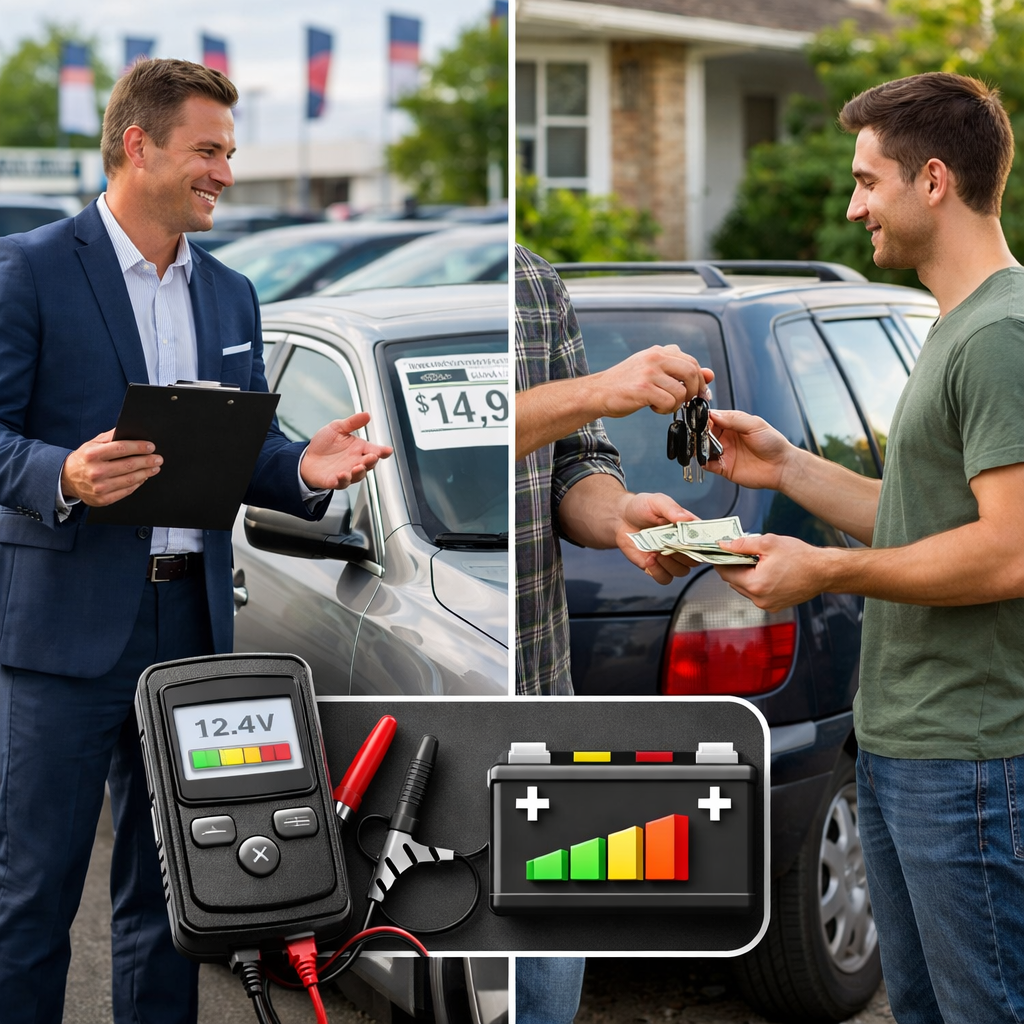
Dealer vs. Private Seller: Cheapest Used Cars, Real-World Tradeoffs
If your goal is the cheapest used cars near me, start with private listings. Individuals usually price lower than dealers because they don’t carry a showroom’s overhead or profit margin. But the rock‑bottom sticker often comes with higher risk, limited recourse, and more DIY legwork. Dealers charge more because they recondition cars, layer in limited protections, and streamline the process—value that can be worth paying for if you want speed and fewer surprises. Below, we break down the real out‑the‑door price, what’s included, and how to compare a private party car against dealer used cars in minutes. At Car Battery Expert, we suggest balancing sticker price with verified condition—especially the electrical system—and total cost to own.
Quick answer for low priced used cars
A private seller is an individual; a used car dealer is a commercial establishment selling pre‑owned vehicles. Private sellers typically list lower prices because there’s no dealer overhead or markup, and fewer fees baked in, a pattern widely noted in the StartCar overview StartCar overview. Dealers usually charge more but reduce risk with inspections, reconditioning, and short‑term protections.
Start here:
- Private listings: Community marketplaces and local classifieds offer the lowest upfront price on private party cars—ideal if you can handle an as‑is car and due diligence.
- Dealer bargain lots: Look for high‑mileage, older dealer inventory at franchise and independent lots for low priced used cars that still include basic checks.
- Verify coverage: “As‑is” means no warranty; some dealers include limited 30‑day drivetrain coverage. Always get the terms in writing and verify basic mechanical and battery health.
Price vs. risk in one line: Private = lowest sticker, highest buyer responsibility; Dealer = higher sticker, lower risk/time.
How dealer and private seller prices really differ
Dealers build a margin to cover reconditioning, sales staff, facilities, and warranty administration. They also add dealer fees (documentation, preparation, licensing) and taxes to arrive at the real out‑the‑door price, whereas private sellers avoid most overhead and fees, so asking prices trend lower. Many dealers source cars at auction and carry floorplan interest, which can shape pricing and sales urgency, as outlined in the MotorTrend car‑buying guide MotorTrend car-buying guide. Private sales typically allow more negotiation flexibility than dealer transactions, a common pattern noted in Rolls Auto’s pros and cons breakdown Rolls Auto pros and cons.
Out‑the‑door price defined: the total you pay to take the car home—vehicle price plus taxes, registration, documentation/prep fees, and any add‑ons. Use this number to compare private vs. dealer options apples‑to‑apples.
| Factor | Dealer used cars | Private party cars |
|---|---|---|
| Price drivers | Used car markup covers reconditioning, overhead, and profit; auction sourcing and floorplan interest can influence pricing. | Minimal overhead; price set by owner’s expectations and market comps. |
| Typical fees | Dealer fees (doc, prep), title/registration service, taxes, optional add‑ons. | Taxes/registration at DMV; usually no doc/prep dealer fees. |
| Negotiation room | Moderate; dealers may protect margin for reconditioning and fees. | High; more flexibility on private party price. |
What you get for the money
Paying more at a dealership can buy you:
- Pre‑sale inspections, reconditioning, and repairs aimed at road‑readiness.
- Limited warranties or short‑term protections; some stores even offer exchange or return windows on certain units, as explained in the Pischke Motors explainer Pischke Motors explainer.
- Broader inventory and a business you can contact for post‑sale support.
What a private seller often delivers:
- Lower upfront price and more room to negotiate.
- Direct access to the owner’s maintenance file and candid use history.
One note on CPO: certified pre‑owned vehicles add manufacturer‑backed inspections and extended warranties. They cost more but reduce risk further than standard dealer used cars.
Risk, recourse, and inspection reality
Private‑party cars are commonly sold as‑is with no warranty and no built‑in path to resolve problems; that raises the odds you’ll pay for hidden issues or face misrepresentation, a core caution echoed by Woodbridge Auto Sales’ pros and cons overview Woodbridge Auto Sales pros and cons. By contrast, many dealers offer limited warranties/short‑term protections and a formal way to escalate complaints; reputable stores may welcome independent inspections before you sign, points highlighted by PLM Motors’ comparison PLM Motors comparison. Car Battery Expert’s added tip: don’t overlook a battery and charging‑system test—electrical issues are common on older used cars.
As‑is sale defined: the vehicle is sold without warranties; once purchased, defects and repairs are your responsibility and legal recourse is limited, often to formal action if severe issues surface.
Seven‑step pre‑purchase inspection flow:
- Review title status and a reputable vehicle‑history report.
- Test drive thoroughly: cold start, highway speeds, braking, parking maneuvers.
- Scan for diagnostic codes, look for leaks, and check tires, brakes, fluids, and battery/charging system health (load test when possible).
- Verify options and ensure all VINs match across vehicle and paperwork.
- Get an independent mechanic inspection; a dealer that welcomes this is a positive sign.
- Confirm written warranty/return terms; note any 30‑day drivetrain coverage or exclusions.
- Document condition with photos and complete a signed bill of sale.
Time and convenience factors
Dealerships provide one‑stop shopping—inventory browsing, test drives, financing, and paperwork in a single visit—which can compress the time to buy to a day or less, compared with the slower DIY flow of private listings, as noted in the Elmwood Auto Sales guide Elmwood Auto Sales guide. Private shopping requires more messaging, meeting, and DMV scheduling.
Common time sinks to watch:
- Dealer: peak‑hour wait times, F&I menu add‑ons, in‑store trade appraisal.
- Private: no‑shows, coordinating inspections, DMV appointments, lien releases and payoff letters.
Financing, payments, and digital checkout
Most dealers offer in‑house or partner‑lender financing; private sellers usually expect cash, a cashier’s check, or a private party auto loan you arrange yourself. To compare real monthly payments:
- Prequalify online with a soft credit check to preview real monthly payments.
- Estimate taxes/fees to get a true out‑the‑door financing comparison.
- E‑sign when available, then schedule home delivery or click‑and‑collect pickup.
Always compare apples to apples: interest rate, term, taxes, and any dealer fees. Remember, a higher dealer price often includes inspection and a limited warranty—value some buyers prefer over a cheaper as‑is car.
Where to find low priced listings online
- Private seller hubs: Local classifieds and community marketplaces are your best shot at the cheapest used cars; be ready to do your own verification on private listings.
- Dealer portals: Franchise and independent dealer inventory pages often list inspected, reconditioned cars with limited warranties and on‑site financing.
Smart filters and saves:
- Sort by price adjusted for model year and mileage.
- Filter for clean titles, one‑owner cars, and documented service records.
- Set price alerts, and compare at least three local comps before committing.
Who should buy from a dealer
Choose a dealer if you want lower risk, quick purchase, and post‑sale support—especially for daily commuters or buyers without mechanical expertise. Benefits include inspected used cars, reconditioning, limited warranty or return policy options, and a licensed business with a reputation to protect. A dealer path also fits if you:
- Need financing or want to roll taxes/fees into a loan.
- Have a trade‑in.
- Prefer e‑signing and home delivery logistics.
Who should buy from a private seller
Go private if budget is tight and you’re comfortable with higher as‑is risk—ideally with mechanical know‑how or access to a trusted inspection. You’ll often get a lower asking price, more room to negotiate a used car deal, and direct owner history. Just remember: if a major defect appears post‑sale, structured resolution is rare and legal action may be your only path.
How to compare a dealer car vs a private car side by side
Use this worksheet to decide fast.
| Category | Dealer Car | Private Car | Notes |
|---|---|---|---|
| Price & fees | Vehicle price + taxes + dealer fees (doc/prep/licensing) | Vehicle price + taxes/registration at DMV | Compare the out‑the‑door price. |
| Condition & inspection | Dealer reconditioning and multi‑point checks | Pay for an independent inspection | Budget for likely repairs. |
| Warranty/recourse | Limited coverage/possible returns | As‑is; minimal formal recourse | Get terms in writing. |
| Financing availability | Access to lender network | Cash or third‑party/private party loan | Match rate/term for fair comparison. |
| Time to complete | One‑stop shopping; faster paperwork | DIY scheduling, DMV visits, payoff checks | Factor in travel and coordination time. |
Five‑step flow:
- Collect VINs and history reports.
- Calculate the out‑the‑door price for both.
- Add inspection cost and likely repairs (including a possible battery replacement).
- Compare warranty/return terms in writing.
- Compare monthly payments using the same APR, term, and taxes.
Online shopping tips from Car Battery Expert
- Prequalify online to see real payments without impacting your score.
- Shortlist 3–5 vehicles with transparent pricing that itemizes taxes and dealer fees.
- Request digital copies of reconditioning/inspection reports and warranty terms; ask dealers if they welcome independent inspections.
- Ask for a recent battery/charging‑system test result or be ready to test it at pickup.
- Complete e‑signing with clear delivery logistics—choose home delivery or click‑and‑collect—and confirm title/registration timelines.
Review hygiene: rely on trusted places for verified reviews, and cross‑check patterns in financing transparency, delivery, and post‑sale support.
Mini glossary:
- Digital checkout: an end‑to‑end online process—prequalification, real payment preview, e‑signing, and scheduled delivery/pickup—that shrinks dealership time to hours, not weeks.
- Click‑and‑collect: reserve online, finish documents digitally, then pick up curbside or in‑store at a preset time window.
Frequently asked questions
Where can I find the cheapest used cars right now
Private sellers often list the lowest prices because there’s no dealer overhead or profit. Compare with dealer bargain lots and use Car Battery Expert’s inspection tips to weigh risk versus included protections.
Are private seller cars always cheaper than dealer cars
Usually, but not always. Car Battery Expert’s take: dealers add value via inspection, reconditioning, and limited warranties, and may discount older or high‑mileage cars to compete.
How do I avoid hidden problems when buying privately
Get an independent pre‑purchase inspection and a vehicle‑history report, verify the title, and test drive thoroughly. Car Battery Expert also recommends a battery and charging‑system test before you pay.
Can I finance a private sale and still see real payments online
Yes. Prequalify with lenders that support private‑party loans to preview payments; Car Battery Expert suggests finalizing documents digitally when available.
What extra fees should I expect at a dealership
Common add‑ons include documentation, preparation, and licensing fees, plus taxes. Ask for a line‑item out‑the‑door quote before you sign—Car Battery Expert always compares OTD numbers.