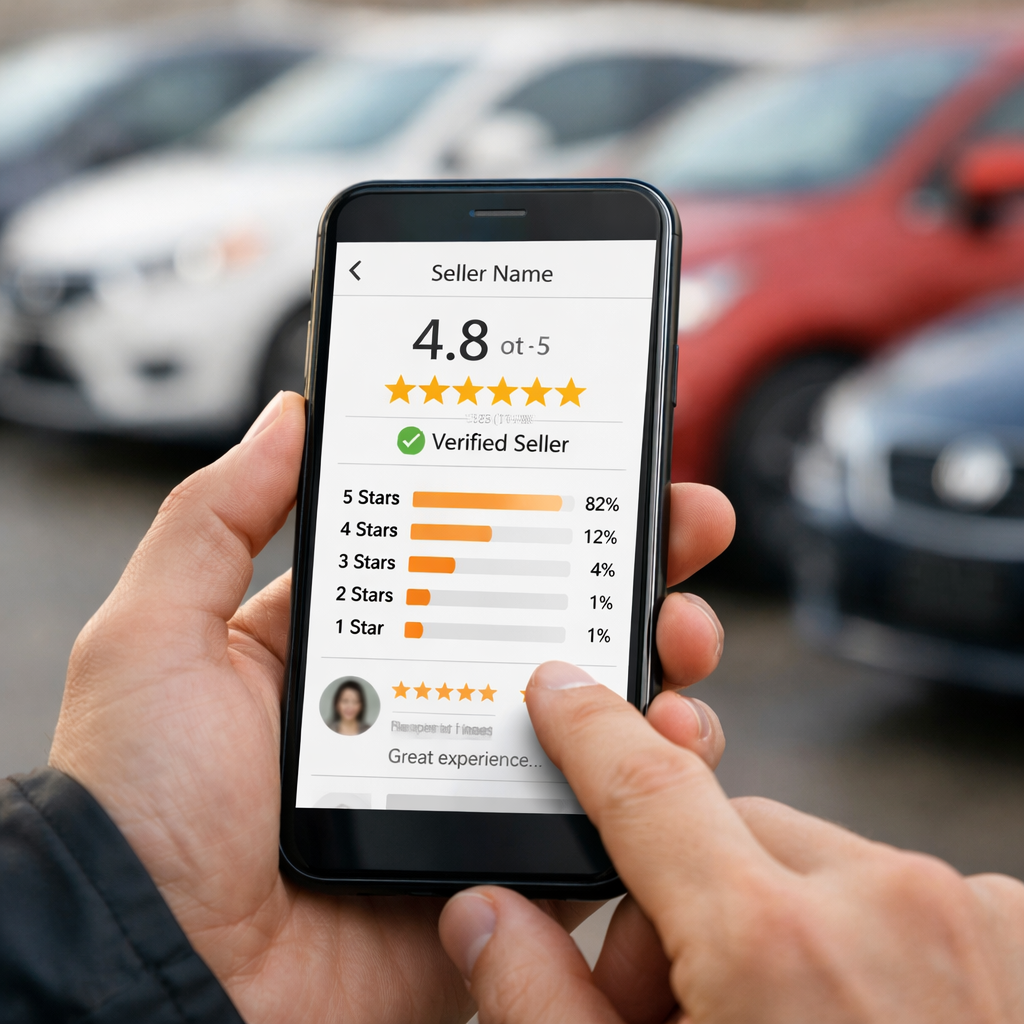
Avoid Lemons: Verify Used Car Seller Ratings Before Buying
Buying used doesn’t have to feel like a gamble. The best place to buy a used car is wherever reputation, transparency, and objective checks line up—think highly rated local dealerships with verifiable histories, clear buyer protection policies, and no-pressure, independent pre-purchase inspections. Start by shortlisting the best-reviewed used car sellers near you on major platforms, then validate those ratings with a VIN-based history report and an independent inspection—including thorough battery and charging-system checks. When ratings, data, and diagnostics agree, you’re far less likely to end up with a lemon.
Why seller ratings reduce risk
Information asymmetry is when one party in a transaction has more or better information than the other. In used-car sales, sellers often know more about past damage, repairs, and ownership than buyers. This imbalance is the core of the “lemons problem” and can push good cars out of the market unless safeguards like warranties, verified histories, and credible reviews rebalance trust (see the “lemons problem” in economics).
High-quality dealer reviews narrow that gap. Google alone captures about 71% of online reviews, so its ratings heavily shape first impressions and trust, especially when paired with auto-specific sites that surface buyer protection details and service practices (see this BirdEye analysis of dealer reviews). Ratings aren’t a substitute for data, but they are a powerful filter to find reputable used car dealers and steer clear of adverse selection.
“Consistent, cross-sourced evidence—ratings + history report + independent mechanic—is the best defense against adverse selection.”
Where to find trustworthy seller ratings
Start with a quick scan of high-signal platforms, then dig deeper to confirm transparency:
- Google Reviews: Broad coverage, large volumes, and recency make this the most visible trust signal (BirdEye notes Google holds ~71% of review share).
- Edmunds and Cars.com: Auto-specific buyer feedback that often highlights test-drive experience, add-on fees, and service follow-through.
- Better Business Bureau and state consumer sites: Check complaint patterns, responsiveness, and any regulatory actions.
- Pro-transparency signs: Many reputable dealers integrate CARFAX into acquisition and reconditioning; that often correlates with stronger disclosure and buyer protection practices (BirdEye).
Verify that the seller discloses the full VIN and encourages third-party reports. Refusing to share the VIN is a red flag (see the Regions Bank guide to used‑car red flags).
How to verify ratings across multiple sources
Use a simple, repeatable flow to cross-check reputation:
- Gather ratings on Google, Edmunds, and Cars.com, noting overall score and review count.
- Scan negative comments for patterns (deception, post-sale issues, undisclosed damage).
- Match those themes against objective data: the vehicle’s history report and your inspection findings.
- Re-check recency—prioritize feedback from the last 3–6 months.
Focus on patterns over one-off anecdotes; recurring, unresolved complaints carry more weight than isolated negatives (BirdEye). To stay organized, build a quick comparison table:
| Platform | Avg. Rating | Review Volume | Last-Quarter Sentiment | Notable Complaint Themes |
|---|---|---|---|---|
| Edmunds | ||||
| Cars.com |
What patterns in reviews signal risk
Flag these themes as potential deal-breakers:
- The seller refuses or delays a pre-purchase inspection by an independent mechanic.
- VIN is withheld, or the advertised VIN doesn’t match the vehicle or paperwork.
- Post-sale trouble spots: warranty denials, refusal to address known issues, or recurring complaints about the same defect.
- Prices far below market without a clear explanation (salvage title, high mileage, auction buy, or known defects should be transparently disclosed).
These indicators frequently align with broader used car buying risks, including scam attempts and dealer red flags.
Cross-check the seller with objective data
Trust, but verify—using data that’s hard to fake:
- Run a VIN-based history report to confirm accidents, title status (clean, salvage, rebuilt), prior owners, odometer consistency, and open recalls; unexplained mileage discrepancies may indicate odometer fraud (see why checking a vehicle history report is essential).
- Verify title status with NMVTIS and confirm the VIN is provided up front; refusal is suspicious (Regions).
- Check recall status through NHTSA sources and ensure any safety recalls are addressed before purchase (reinforced by seven tips for avoiding a lemon and the vehicle history guidance above).
- Third‑party history services aggregate massive datasets—CARFAX, for example, maintains more than 28 billion vehicle history records—substantially reducing information asymmetry (context from BirdEye and the lemons problem overview).
Demand independent inspection and test drive
An unbiased pre-purchase inspection (PPI) is non-negotiable:
- Arrange a PPI with a licensed, independent mechanic—be present if possible—and request a full written report and estimate (as recommended in seven tips for avoiding a lemon).
- Sellers who refuse, stall, or pressure you to skip inspection are signaling a serious red flag (Regions; Overstock).
- Test-drive checklist:
- Dashboard warning lights: airbag/SRS, ABS, check engine; a persistent airbag light can indicate prior deployment and improper replacement (see Consumer Reports’ advice on avoiding lemons).
- Braking, alignment, and road noise at various speeds.
- HVAC and electrical functions: blower speeds, window switches, infotainment, lights.
Legal and warranty protections to review
Paperwork defines your recourse:
- Compare remaining factory warranty coverage; buying a car that’s still within factory coverage can preserve some lemon-law protections, while private-party purchases generally offer limited recourse without written guarantees (see state lemon-law insights and Consumer Reports).
- Read arbitration or mediation clauses before signing; they can restrict your ability to sue in court and outline specific dispute processes and timelines.
- Confirm any dealer-provided limited warranties and return/exchange policies in writing, and keep copies of every document, ad, and message.
Battery-specific checks before you buy
Electrical health is foundational to reliable ownership and total cost of ownership:
- Under-hood inspection: Look for corrosion, damaged terminals, loose clamps, and correct venting; note the battery date code and verify brand/size consistency with spec.
- Maintenance records: Ask for proof of battery age, replacements, alternator or starter work; missing records—especially on start/stop or luxury models—raise risk.
- During the test drive: Watch for dimming lights at idle, slow cranking, or flickering screens—classic signs of a weak battery or alternator issues.
- Research reliability: Favor models with strong electrical reliability and scan owner forums for known gremlins and workarounds (echoed by Consumer Reports and lemon-avoidance tips). Car Battery Expert prioritizes these checks to minimize electrical surprises after purchase.
For ongoing health tracking after purchase, consider a quality monitor (see Car Battery Expert’s guide to the best car battery monitors).
Tools for on-the-spot battery and electrical testing
Bring simple diagnostics—or ensure your mechanic uses them:
- Multimeter: Measure open-circuit voltage (target ~12.6V fully charged) and charging voltage with the engine running (roughly 13.7–14.7V).
- Battery load tester: Simulate starting load to assess real capacity under stress.
- OBD-II scanner: Check for charging-related fault codes and freeze-frame data.
Quick how-to: A healthy, fully charged battery should read about 12.6V at rest; during cranking, voltage shouldn’t plunge excessively; running voltage in most vehicles should land between ~13.7–14.7V. To extend life (and avoid premature replacement), use a maintainer on vehicles driven infrequently. These are the same quick diagnostics we teach in Car Battery Expert guides.
Helpful buying resources:
- Car Battery Expert: Best car battery testers
- Car Battery Expert: Best multimeters for car batteries
- Car Battery Expert: Best car battery monitors
Red flags that justify walking away
- Seller refuses a PPI or to share the VIN; VIN/title inconsistencies.
- Price dramatically below market with vague or shifting explanations.
- Flood damage indicators: mildew smell, silt under carpets, uneven carpet color, rust under seats, intermittent electrical issues (Consumer Reports).
- Requests for wire transfers or advance payments to distant or third-party “shippers” (Regions).
Final checklist before committing
- Aggregate ratings from at least 3 platforms; note pattern-based risks and recency (BirdEye).
- Obtain the VIN; run a history report; verify title, odometer, accidents, and recalls; confirm recalls are addressed (vehicle history guidance; Regions; lemon-avoidance tips).
- Schedule an independent PPI; attend and get a written report and estimate (Overstock).
- Perform battery/electrical checks; document voltage readings, load-test results, and any OBD-II codes.
- Review warranty, return policy, and dispute-resolution terms; retain copies of all documents (Consumer Reports).
Use this printable tracker:
| Task | Document/Evidence | Status (Yes/No) | Notes |
|---|---|---|---|
| Ratings aggregated (Google, Edmunds, Cars.com) | Screenshots/links | ||
| Complaint themes reviewed (last 3–6 months) | Notes summary | ||
| VIN obtained and verified | VIN photo | ||
| History report reviewed | Report PDF | ||
| Title/odometer/recalls confirmed | NMVTIS/recall checks | ||
| Independent PPI completed | Mechanic report | ||
| Battery/electrical tests documented | Voltage/load/OBD-II | ||
| Warranty/return/arbitration terms | Signed contract |
Frequently asked questions
How do I find the best-reviewed used car sellers in my area
Check Google, Edmunds, and Cars.com for dealer pages with high ratings, large review counts, and recent positive feedback. After shortlisting, use Car Battery Expert’s checklists to verify battery and electrical health.
Which review sites are most reliable for dealer ratings
Start with Google for breadth and recency, then compare against auto-focused sites like Edmunds and Cars.com. Look for consistency across platforms and focus on recurring complaints, then pair findings with Car Battery Expert’s battery checks.
How do I combine ratings, history reports, and inspections to avoid a lemon
Use ratings to shortlist reputable sellers, run a VIN-based history report to confirm title, mileage, accidents, and recalls, then get an independent pre-purchase inspection that includes charging-system tests. Car Battery Expert’s checklists help you document results.
What battery and charging issues should I check on a used car
Inspect for corrosion, check battery age, and measure voltage with a multimeter; verify charging voltage with the engine running. Car Battery Expert’s multimeter and load-test guides show the exact steps.
When should I back out based on reviews or inspection findings
Walk away if the seller refuses a pre-purchase inspection, won’t share the VIN, or you see flood-damage clues or major electrical issues. If you’re unsure, Car Battery Expert recommends walking away.