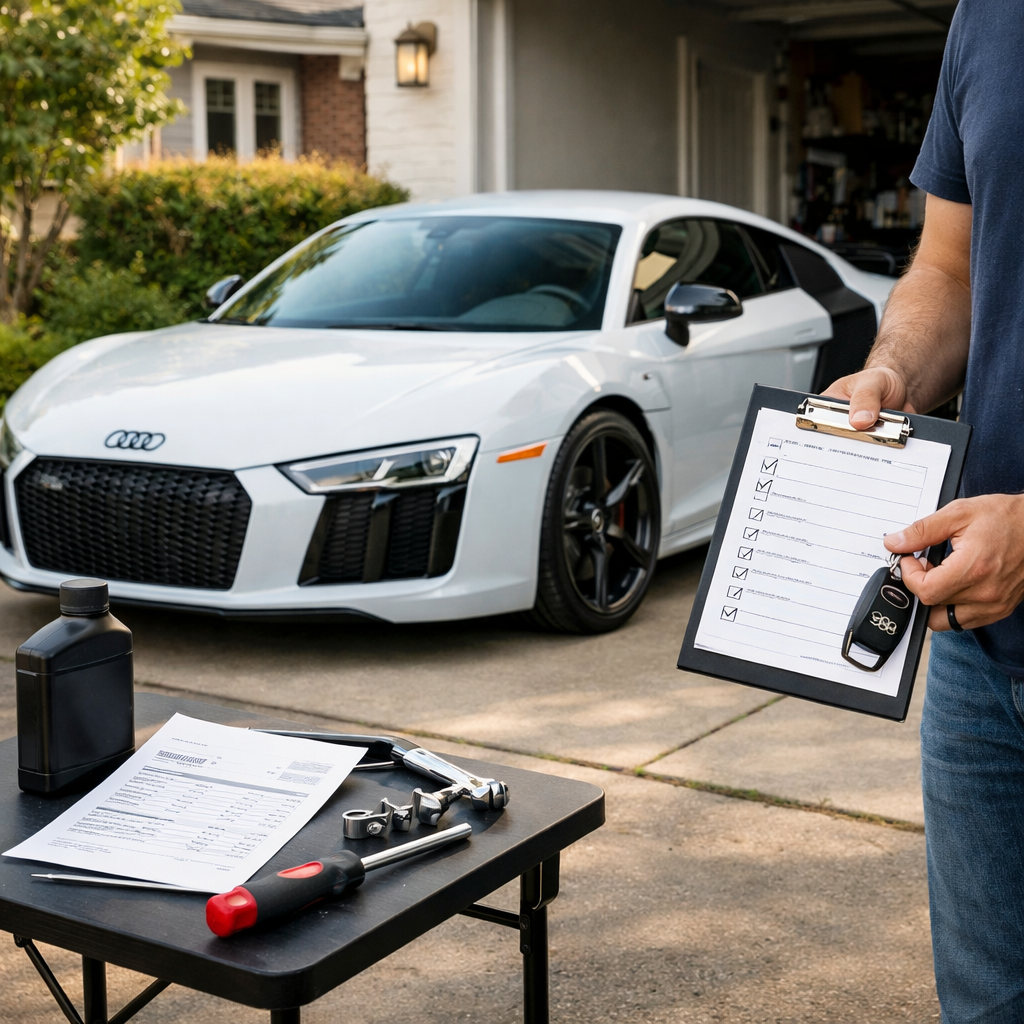
Audi R8 Ownership Explained: Real Costs, Maintenance, Daily Usability
Owning an Audi R8 sits at the rare intersection of supercar theater and genuine livability. It rides compliantly enough for commuting, has sensible front‑trunk space, and is easy to see out of for a mid‑engine exotic—traits owners and reviewers consistently note, making it one of the few true “daily-drivable” supercars (Exotic Car Trader). Yet the R8’s V10 appetite and parts pricing still land it firmly in the supercar cost tier. Expect annual running costs around $10,000–$25,000 depending on mileage, coverage, and repair luck, with a commonly cited midpoint near $15,000. Below, we detail what daily life looks like, full cost buckets, reliability, and a deep dive on the R8’s battery—where a weak unit can trigger gremlins and no-starts. If you’re budgeting with eyes open, the R8 can deliver both refinement and brutality in one package (MotorTrend). Because electrical health underpins the R8’s electronics, Car Battery Expert prioritizes correct fitment, testing, and maintenance to avoid no‑start headaches.
Snapshot of R8 ownership
The R8 is unusually easy to live with for a mid‑engine exotic: a compliant ride, decent visibility, and a useful frunk make it practical enough to commute, as owners and testers point out (ExoticCarTrader). MotorTrend famously summed it up as a blend of refinement and brutality, capturing its dual nature as both civilized and savage when asked (MotorTrend). Running costs, however, are real supercar numbers. Owners frequently cite $10k–$25k annually; one long-term owner pegs the average year at roughly $15k (YouTube). Forum tallies show how quickly wear items add up; one owner logged about $6,600 in just three months for brakes, tires, a blowout, and scheduled service, excluding fuel, insurance, and depreciation (R8Talk).
At a glance (typical figures; U.S.):
| Category | Typical Figure |
|---|---|
| Purchase price | 2022 R8 MSRP: ~$161k–$253k (MotorTrend) |
| Insurance | ~$200–$500+/month (owner-reported) |
| Fuel | Premium; mid‑teens mpg real world |
| Routine service | ~$200–$1,000 per visit |
| Tires/brakes | Tires ~$1,000–$1,500/set; major brake jobs ~$3,500+ |
| Major repairs risk | Examples: A/C compressor ~$7k–$12k; transmission/engine work high five to six figures (owner reports) |
What it’s like to live with an R8 daily
The R8’s cabin is comfortable and thoughtfully laid out. Visibility is better than most mid‑engine rivals, and the front trunk is genuinely useful for a backpack and a couple of soft bags—key reasons it’s considered daily‑usable (ExoticCarTrader; MotorTrend). Audi’s Virtual Cockpit puts navigation and media into a 12.3‑inch driver display; there’s no central touchscreen, which simplifies the dash and makes the cluster the control center (MotorTrend). Constraints remain: it’s a two‑seater with limited cargo, and wide tires make winter use tire‑dependent. Many owners say buying used helps ease mileage anxiety, encouraging them to actually drive the car (R8Talk: daily driving thread).
Daily driver definition: A daily driver is a vehicle used for routine commuting and errands. It prioritizes comfort, reliability, fuel efficiency, and manageable running costs. For supercars like the R8, daily‑drivable means reasonable ride quality, visibility, and storage without compromising essential performance or safety features.
Total cost of ownership overview
Total cost of ownership (TCO) is the all‑in cost to own and operate a vehicle over time, including purchase price, depreciation, taxes/fees, insurance, fuel, maintenance, wear items (tires/brakes), financing interest, and unscheduled repairs. It reveals real affordability beyond sticker price.
Your actual TCO will vary by mileage, driving style, and repair luck. The $15k/year midpoint is a helpful anchor (YouTube), but forum reports show wide spreads year‑to‑year (R8Talk: running costs).
| Category | Typical Range | Notes | Sources |
|---|---|---|---|
| Insurance | ~$200–$500+/mo | Older/experienced owners near low end; young/urban can be higher | Exotic Car Hacks |
| Fuel (premium) | Mid‑teens mpg | RWD EPA ~14/23 mpg; AWD ~13/19 mpg; spirited use lowers mpg | Automod Express |
| Routine service | ~$200–$1,000/visit | Oil services ~$200–$400; larger periodic services higher | Automod Express; Exotic Car Hacks |
| Tires | ~$1,000–$1,500+/set | 19–20" UHP tires; faster wear with aggressive use | R8Talk (owner tallies) |
| Brakes | ~$3,500+ per job | Steel rotor jobs vary; ceramics costly but last longer | R8Talk (owner tallies) |
| Big‑ticket risks | $7k–$12k (A/C), higher for drivetrain | Rare but meaningful when they occur | Audi R8 Owners Group (A/C posts) |
Purchase price and depreciation factors
For recent cars, 2022 R8 MSRPs ranged roughly $161,395–$253,290 depending on trim, driveline, and options (MotorTrend). Desirable specs support resale and can narrow lifetime cost per mile—V10 powertrains, rare colors, and documented maintenance help; early manual‑transmission cars are especially sought after (ExoticCarTrader). To manage depreciation: buy the right spec, avoid accident history, insist on records, and consider lightly used, well‑optioned examples.
Purchase math mini‑checklist:
- Upfront price and taxes/title/registration
- PPI cost and any travel/shipping
- Warranty or service contract price
- Expected 3‑year depreciation band
- Immediate catch‑up maintenance or tires/brakes
Insurance expectations and variables
Owner reports cluster around ~$200–$250/month for mature drivers with clean records, while younger drivers or high‑risk regions can see $400–$500+/month (Exotic Car Hacks). Premiums are higher than normal cars due to value and performance; comprehensive coverage is prudent given repair costs (Automod Express). Factors that swing price: age, location, driving record, annual mileage, coverage limits, agreed value, and storage (garage vs. street).
Agreed‑value policy: An agreed‑value policy lets you and the insurer set the car’s insured value upfront. If the vehicle is totaled, the payout equals the agreed value minus any deductible, not market value. It’s common for specialty and collector cars to avoid depreciation disputes.
Fuel economy and real-world costs
EPA estimates (gasoline, premium required): RWD models are rated about 14 mpg city / 23 mpg highway; AWD variants about 13/19. Spirited driving often yields mid‑teens combined (MotorTrend; Automod Express).
Estimate your monthly fuel cost:
- Formula: Monthly fuel = (annual miles ÷ combined mpg) × price per gallon ÷ 12
- Example 1: 10,000 miles/year ÷ 16 mpg × $4.00 = ~$208/month
- Example 2: 7,500 miles/year ÷ 15 mpg × $4.25 = ~$177/month
Scheduled service and maintenance intervals
Routine service follows roughly a 10k‑mile cadence: oil and filter, brake checks, tire rotations (front‑to‑rear where stagger allows), fluid top‑offs, and multipoint inspections. Typical oil services run ~$200–$400, with larger periodic services in the ~$600–$1,000 range depending on region and shop (Automod Express; Exotic Car Hacks; Reddit V10 thread).
Suggested maintenance planner:
| Interval | Item | DIY vs. Shop | Typical Cost | Notes |
|---|---|---|---|---|
| 5k–10k miles | Oil & filter | DIY or shop | $200–$400 | Use Audi‑spec 0W‑40/5W‑40 and OEM filter |
| 10k miles | Cabin filter, inspection | DIY or shop | $75–$200 | Check belts/hoses, coolant, leaks |
| 20k–30k miles | Engine air filter | DIY or shop | $50–$150 | More frequent in dusty climates |
| Every 2 years | Brake fluid flush | Shop | $150–$250 | Critical for track/spirited use |
| As needed | Alignment | Shop | $150–$250 | Do after tire replacement or impacts |
| Battery test annually | Battery health | DIY or shop | $0–$50 | See battery section for specs and care |
Wear items that drive costs
Expect higher‑frequency expenses from tires and brakes. One owner documented about $6,600 in three months: ~$3,500 for brakes, ~$1,300 for tires, ~$800 for a blowout, and ~$1,000 for a 50k‑mile service (R8Talk: running costs). A UK lens: expect roughly £350 per corner for quality tires and £600–£1,000 for services every 8–10k miles (Reddit V10 thread).
Typical replacement cadence (varies widely with driving):
- Tires: 8k–15k miles; fewer if driven hard or tracked
- Brake pads/rotors: street use can see long life; track days accelerate wear dramatically
- Alignments: after new tires or any curb hit/impact
- Wipers, cabin filter: annually or as needed
Unscheduled repairs and risk management
Most R8s are dependable, but outliers happen—and they’re expensive. Community reports cite A/C compressor jobs around $7k–$12k (Audi R8 Owners Group), and, while rare, drivetrain work can escalate quickly; V8s are sometimes cheaper to repair than V10s, but transmissions are costly regardless (R8Talk). Strategies:
- Get a thorough PPI from a marque‑experienced shop before buying
- Keep a 10% reserve of purchase price for surprises
- Consider a reputable extended warranty/service contract
- Favor cars with full, documented maintenance histories
PPI definition: A pre‑purchase inspection (PPI) is a comprehensive, independent evaluation of a used vehicle’s mechanical, electrical, and structural condition. It typically includes a road test, diagnostic scan, underbody and leak checks, and service record review to uncover issues before you commit to purchase.
Battery specifics for the Audi R8
Supercars are sensitive to voltage stability. A weak or sulfated battery can trip modules, throw false errors, and cause hard‑starts. The R8’s parasitic draw can also drain a battery if the car sits for weeks. Getting fitment, chemistry, and charging right prevents headaches.
OEM battery group size and fitment
Common fitments by generation (verify by VIN and measure the tray before purchase; the frunk is tight):
| Model years/engine | Common group (DIN/SAE) | Approx. dimensions (L×W×H) | Polarity | Hold‑down |
|---|---|---|---|---|
| 2008–2015 R8 V8/V10 (Gen 1, Type 42) | H6 / Group 48 AGM (some V10s use H7/94R) | H6: ~12.1×6.9×7.5 in (306×175×190 mm) | Group 48: standard; 94R: reversed (positive right) | Bottom ledge (B13) |
| 2017–2023 R8 V10 (Gen 2, Type 4S) | H7 / Group 94R AGM (80–95Ah typical) | H7: ~12.4×6.9×7.5 in (315×175×190 mm) | Reversed (positive right) | Bottom ledge (B13) |
Notes:
- Many cars ship with ~70–95Ah AGM units rated around 760–900 CCA.
- Some aftermarket H8/Group 49 units are too long; confirm space and hold‑down fit before buying.
- If your car has additional audio or telemetry equipment, favor higher reserve capacity (Ah/RC).
AGM vs flooded vs lithium recommendations
AGM battery: Absorbent Glass Mat (AGM) batteries suspend electrolyte in fiberglass mats, making them spill‑proof, vibration‑resistant, and better at supporting high electrical loads and start‑stop systems. They accept charge faster, have lower self‑discharge, and typically last longer than standard flooded batteries in performance applications.
Recommendations:
- AGM (default): Best balance of durability, heat/vibration resistance, and stable voltage for sensitive modules.
- Flooded (budget only): Lower upfront cost but less resilient; greater spill risk and higher self‑discharge.
- Lithium (performance): Very light and strong cranking; requires compatible charger/BMS, can have reduced cold‑weather performance, and higher cost.
Pros/cons snapshot:
- AGM: + Robust, low maintenance; − Heavier than lithium, pricier than flooded
- Flooded: + Cheapest; − Shorter life, voltage sag under load
- Lithium: + Lightest, high CCA/kg; − Expensive, cold‑start limitations, charging care needed
CCA, reserve capacity, and climate considerations
CCA definition: Cold‑cranking amps (CCA) measure how many amps a battery can deliver at 0°F for 30 seconds while maintaining 7.2 volts. Higher CCA improves cold starts but may trade weight and cost. Performance cars often benefit from robust CCA for reliable cranking.
Targets:
- Match or exceed OEM CCA (≈760–900 CCA) and capacity (≈70–95Ah) for reliable starts and stable electronics.
- Cold climates: prioritize higher CCA within fitment; consider an insulated blanket and indoor storage.
- Hot climates or cars that sit: prioritize higher reserve capacity (RC/Ah) and use a maintainer; heat accelerates degradation.
Charging, storage, and parasitic draw prevention
Parasitic draw definition: Parasitic draw is the electrical current a vehicle consumes when the ignition is off. Normal draws power memory modules and alarms; abnormal draw from faults can drain a battery overnight. Testing with a multimeter and fuse‑pull method isolates the offending circuit.
Best practices:
- Use a smart maintainer with AGM or lithium mode as appropriate; Car Battery Expert can help you choose a compatible unit.
- After cold starts, drive 20–30 minutes to replenish charge.
- Four‑step health check: connect maintainer; verify correct mode; after resting 4–8 hours, confirm >12.5V; if <12.3V, load‑test and check for excessive draw.
Safe DIY replacement and recycling
Seven‑step checklist:
- Preserve settings with an OBD memory saver if available.
- Wear gloves/eye protection; prop the frunk securely.
- Disconnect negative (-) first, then positive (+); remove hold‑down.
- Place the new battery; ensure proper venting/orientation and secure the hold‑down.
- Connect positive (+) then negative (−); apply light dielectric grease; torque terminals to spec.
- Register/adapt the battery in the energy management system if required using a scan tool.
- Recycle the old unit at an approved center; reclaim any core charge.
Helpful tools: 10mm wrench, torque wrench, battery strap, OBD memory saver, smart charger/maintainer, dielectric grease.
Reliability insights and model considerations
Audi’s build quality and parts sharing with Lamborghini make the R8 appealing for long‑term ownership; across its run, it evolved from early V8s to V10‑only and special R8 GT variants (ExoticCarTrader). Major failures are uncommon but high‑impact when they occur, and costs vary with region, usage, and luck (R8Talk). V10 cars deliver the drama most buyers want; V8s can offer lower entry and, in some cases, lower repair costs.
Practical usability tips
- Approach steep driveways diagonally; use the nose‑lift if equipped.
- Warm tires before hard driving; plan for regular heat cycles.
- Budget for at least one set of tires per year if you drive often.
- Keep a smart battery maintainer connected when the car sits.
- Schedule an alignment after any tire change or pothole impact.
- Learn the Virtual Cockpit; it’s the command hub with no central touchscreen (MotorTrend).
- Park securely and avoid tight curbs; front splitters and wheels are exposed.
- Carry a 12V jump pack designed for AGM/lithium to avoid tow delays.
Pre-purchase inspection and documentation checklist
- Full PPI by an R8‑experienced independent or dealer
- Electronic scan for stored/pendings codes
- Borescope/underbody inspection for leaks and damage
- Magnetic ride (if equipped) strut leak check
- A/C performance and compressor noise check
- Clutch/transmission function (S‑tronic behavior, manual where applicable)
- Brake pad/rotor measurements; look for warped rotors
- Tire tread and date codes; match sets and correct sizes
- Service records (oil intervals, brake fluid, spark plugs, Haldex/quattro fluids where applicable)
- Accident history and paint meter readings
- Open recalls and campaign completion
- Battery age/test printout and charging system health
How to budget realistically for an R8
Use five buckets: depreciation/finance, insurance, fuel, maintenance/wear, and a capital reserve equal to ~10% of purchase price. Example: at 7,500 miles/year and 16 mpg combined with $4.00 premium, fuel is about $156/month; insurance might be $225–$400; add ~$200–$400/month equivalent for maintenance/wear averaged over time. At 12,000 miles/year, fuel rises proportionally. Many owners land near $15k/year as a midpoint, but one or two major repairs can double a year’s spend (YouTube; R8Talk).
When an R8 makes sense as a daily driver
Say yes if you have secure parking, a reasonable commute, room in the budget for premium fuel and wear items, and you accept two seats and limited cargo. It’s comfortable, refined, and visibility is good for an exotic (ExoticCarTrader; MotorTrend). Consider “maybe/no” if roads are rough, winters are severe without proper tires, or a $5k–$10k surprise would be disruptive.
Frequently asked questions
What is a realistic annual budget to own an R8?
Most owners should plan $10k–$25k/year depending on mileage and repair luck, with a common midpoint near $15k that covers insurance, premium fuel, routine service, and a set of tires.
How often do tires and brakes need replacement on an R8?
Tires can last 8k–15k miles depending on driving; brake life varies widely. Aggressive or track use accelerates both, so budgeting for one set of tires per year is prudent for average mileage.
Is the R8 reliable enough for daily commuting?
Yes for many owners—it’s comfortable and usable, but running costs are higher than normal cars, and rare big repairs can be expensive. Secure parking and a maintenance budget make daily use more practical.
What battery type should I choose for an R8 and why?
Choose AGM as the default for better vibration resistance, stable voltage for sensitive electronics, and lower self‑discharge; lithium is lighter but costlier and needs compatible charging, while flooded is budget‑only. Car Battery Expert can confirm exact fitment and charging setup for your climate and use.
How can I reduce the risk of a major repair bill?
Get a thorough PPI, choose cars with documented maintenance, keep a 10% reserve of purchase price, and consider a reputable extended warranty or service plan to cap catastrophic costs.