2026 Guide: Cheapest Places to Buy Reliable Used Cars Online
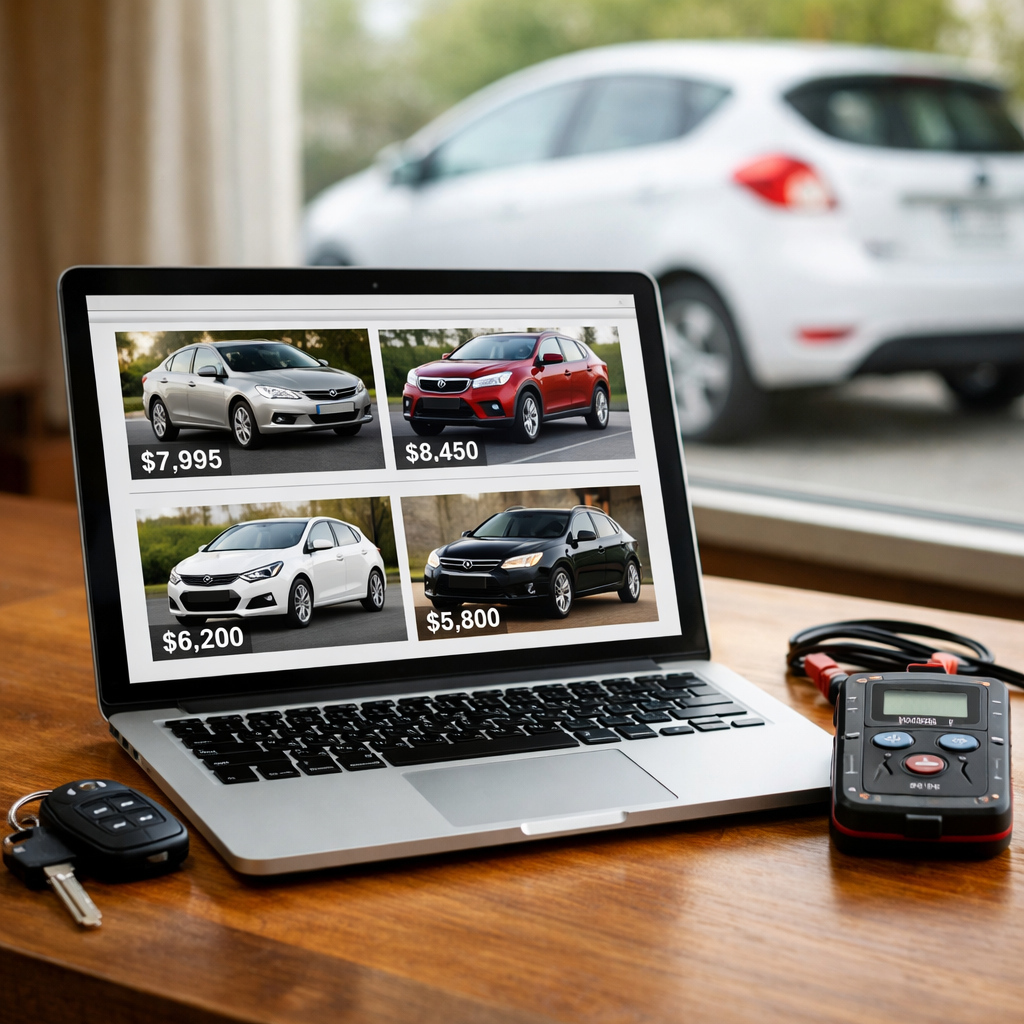
Hunting the cheapest places to buy reliable used cars online starts with casting a wide net and comparing true out-the-door pricing. In 2026, the lowest asking prices typically surface on national aggregators, local classifieds, and private-seller platforms—while off-lease and rental/fleet channels balance low price with predictable maintenance. You’ll save most by cross-shopping at least three sites, filtering for clean histories, and validating value with a pre-purchase inspection and battery and electrical checks. This guide shows you where to look, how to compare fees, shipping, and return windows, and which models deliver long-term reliability and low total cost of ownership.
Car Battery Expert
At Car Battery Expert, we eliminate guesswork for budget-minded buyers with safety-first, data-backed advice. Our approach: find the cheapest used cars online without sacrificing reliability or electrical-system health. That means screening for dependable models, verifying charging systems and parasitic drain, and budgeting for the battery you’ll actually need.
Total cost of ownership is the all-in cost to run the car over time, including fuel, insurance, maintenance, tires/brakes, battery replacement, and depreciation. It’s the difference between a car that’s cheap to buy and one that’s actually cheap to own.
We prioritize models and sources proven to be dependable after their biggest depreciation hit—mirroring how Consumer Reports selects used-car winners by focusing on standout value after depreciation, not just new-car top scorers (see Consumer Reports’ value-driven approach in its Best Used Cars overview).
Aggregators and classifieds
Used car aggregators and classifieds collect massive inventories across dealers and private sellers. With more listings and fewer middlemen, sellers compete harder on price—often making these the cheapest places to surface local and nationwide “cheap used cars near me.” Set price alerts, compare across at least three platforms, filter for accident-free and one-owner histories, and verify VINs. Before you buy, run Car Battery Expert’s quick battery and electrical checks to avoid a “cheap” car with costly power issues.
Mini checklist for 2026:
- Run a full history report and check for open recalls.
- Request maintenance records and confirm schedule-adherent services.
- Schedule an independent pre-purchase inspection (PPI); this remains a core best practice in 2026 per buyer guides like the Smart Buyer’s Guide for 2026.
Online marketplaces
Standardized listings, visible fees, and integrated logistics make online car marketplaces price-transparent and time-efficient. Always compare the true out-the-door price: vehicle price + taxes + doc/dealer fees + shipping + any marketplace or buyer fees.
Key comparison points:
- Fees: Buyer fees, document fees, marketplace service fees.
- Logistics: Delivery options, shipping estimates, and whether you can pick up to save costs.
- Protections: Return windows, money-back guarantees, and inspection or condition reports.
Marketplace comparison (typical ranges; confirm per listing):
| Platform type | Buyer fee structure | Return policy window | Shipping estimate | Inspection/report availability |
|---|---|---|---|---|
| National online marketplace | Flat/percent buyer fee or none | 7–14 days on eligible units | Door-to-door, variable by distance | Advertised condition reports; PPI may be allowed |
| Dealer listing portal | None to minimal | Dealer-specific (often none) | Dealer-arranged or self-book | Dealer inspection sheets; third-party PPI recommended |
| CPO/franchise portals | None | Varies by brand/dealer | Dealer or third-party | Multipoint CPO inspection summary |
| Auction-style marketplace | Buyer premium + doc fees | Typically none (as-is) | Transport required | Limited condition info; PPI if permitted |
Use deal-rating tools and market comps to validate price; you can also pair your short list with negotiation services to trim markup and lock a better OTD number. Pair your shortlist with Car Battery Expert’s battery/electrical pre-buy protocol to avoid surprise repair costs.
Certified pre-owned at franchised dealers
Certified pre-owned (CPO) vehicles are used cars vetted by the manufacturer’s program, typically with a multipoint inspection and a limited factory-backed warranty. This reduces risk for higher-mileage drivers and can improve financing terms, though you’ll usually pay a modest premium.
CPO shines on high-volume, off-lease models where 2026 supply keeps prices competitive. Compare a CPO car to an equivalent non-CPO unit: compute the CPO premium, divide by warranty years to estimate cost per year, and review exclusions—especially hybrid/EV battery coverage and electrical components. Car Battery Expert recommends getting hybrid/EV battery coverage terms in writing and confirming which electrical items are included.
Off-lease inventories
Ex-lease vehicles (often 2–4 years old) are prime value: uniform specs, documented maintenance, consistent mileage, and sometimes remaining factory protections. In 2026, ample supply keeps prices sharp on popular models. Favor brands with strong dependability—Lexus, Toyota, and Honda consistently lead—according to J.D. Power’s 2026 dependability results where Lexus ranked No. 1 at 151 problems per 100 vehicles and Volkswagen trailed near 301 PP100, underscoring brand-level reliability spread. Car Battery Expert favors off-lease units with well-documented electrical and charging-system service history.
Quick steps:
- Verify schedule-adherent maintenance and software/recall updates.
- Inspect tire/brake wear common on lease returns.
- Check for ride-share or commercial-use indicators in records and condition.
Dealer-direct no-haggle retailers
Fixed-price used car retailers can still be “cheap” in real terms when you account for time saved, transparent reconditioning, return windows, and bundled protections. Compare their price against aggregator comps and calculate the full OTD number with taxes and fees.
Pros:
- Fast purchase, predictable pricing, standardized inspections. Cons:
- Potentially higher sticker; limited bargaining on the vehicle price.
Mitigate by negotiating add-ons, trade-in value, and financing terms, and confirm any included warranty or service plan. Even with standardized inspections, run Car Battery Expert’s battery and charging tests before you commit.
Private seller platforms
Private-party used cars are often 5–15% cheaper because there’s no dealer overhead. Diligence matters more: confirm the title is clear, check lien status, and demand complete records.
Step-by-step:
- Request VIN and all service records; run a comprehensive history report.
- Meet in a safe, public location; bring a trusted mechanic or schedule a mobile PPI.
- Test drive on highway and city routes; verify cold start behavior.
- Complete payment via a secure, traceable method and follow state titling rules.
- Budget for day-one maintenance: oil, filters, tires/brakes as needed, plus a battery test or replacement—especially if it’s 4–6 years old in hot climates.
Auction and government surplus portals
Government surplus auctions are public sales of retired fleet vehicles (municipal, state, federal) with basic condition disclosures and minimal cosmetic prep. Prices can land well below retail, but cars are sold as-is with limited test drives and no returns.
Beginner tactics:
- Attend preview days; focus on known fleet models (Corolla, Camry).
- Set a max bid from comparable sales and stick to it.
- Add PPI if permitted; if not, expand your reconditioning budget. Risks include unknown maintenance gaps and as-is electrical issues—plan for immediate battery/charging checks upon pickup.
Concierge and negotiation services
Professional negotiators and pricing tools can reduce dealer markup without you haggling. Automotive specialists report real buyer wins—documented savings of over $4,500 on recent purchases—illustrating the leverage of multi-dealer bidding and data-backed offers.
Use cases:
- Hard-to-find trims, short timelines, or when you want multiple dealers to compete on your target OTD. Best practices:
- Set a firm OTD target, allow the service to solicit quotes, and compare their fees against demonstrated savings.
- Always get a written OTD breakdown to avoid add-ons. Verify any negotiated deal with Car Battery Expert’s battery/electrical checklist before signing.
Local credit union partner networks
Credit unions are hidden-value channels: you can secure pre-approved auto loans and access partner-dealer pricing or in-house car-buying services. Ask about rate discounts, GAP/extended warranty bundles at member pricing, and local dealer partners.
Compare partner listings against public-market comps; even if the vehicle price is set, negotiate accessories and doc fees. Bring your pre-approval letter to strengthen bargaining and keep the OTD target firm. Bring this Car Battery Expert guide’s TCO and battery checklists to keep numbers realistic.
Insurance and rental fleet resale sites
Former rental and fleet vehicles are predictable and often priced lower due to higher mileage and standardized maintenance. They’re great for buyers prioritizing price and service records over ultra-low miles.
Evaluate carefully:
- Inspect interior wear, tires/brakes, alignment, and body panel consistency.
- Run a scan for stored codes; verify maintenance intervals and recall completion.
- Focus on common, mid-cycle models with abundant 2026 supply to secure the best pricing; validate with market comps and TCO estimates. Car Battery Expert advises extra attention to battery age and charging performance on ex-rental vehicles due to frequent short trips and idling.
How to spot reliable models and trims
Brand-level reliability matters. In 2026 dependability results, Lexus tops the charts at 151 PP100 while Volkswagen is near 301 PP100—proof that starting with strong brands shrinks repair risk.
Value picks to consider (prices vary by region, condition, and mileage):
| Model (target years) | Typical used price band | Combined mpg (approx.) | Reliability/Safety notes |
|---|---|---|---|
| Toyota Corolla (2016–2021) | ≈$10k–$18k | ~32–34 mpg | Reliable with low maintenance; many with AEB in later years (Consumer Reports). |
| Toyota Camry Hybrid (2018–2022) | ≈$16k–$28k | ~52 mpg | Exceptional fuel savings; strong long-term value per AAA’s 2026 overview. |
| Subaru Crosstrek (2018–2021) | ≈$14k–$24k | ~29 mpg | Comfortable ride and solid reliability (Consumer Reports). |
| Mazda6 (2014–2018) | Often sub-$10k–$14k | ~32 mpg | Underrated value; many clean, low-cost examples (Consumer Reports/SlashGear summary). |
| Toyota Highlander (2015–2019) | ≈$15k–$28k | ~20 mpg V6; Hybrid ~25 mpg | Later models add FCW/AEB; family-friendly reliability (Consumer Reports). |
| Lexus NX (2015–2019) | ≈$18k–$30k | ~25 mpg | Luxury reliability edge; undercuts many rivals on TCO (Consumer Reports roundups). |
| Toyota Prius (2016–2019) | ≈$12k–$19k | ~50+ mpg | Often under $20k in recent model years; excellent economy (Consumer Reports/SlashGear). |
For cross-checking trims and years across classes, consult the U.S. News used car rankings to compare scores, safety tech, and owner feedback.
Total cost of ownership checklist
Before committing, run this TCO checklist:
- Fuel economy vs. your annual miles (e.g., Camry Hybrid ~52 mpg; Crosstrek ~29 mpg; Mazda6 ~32 mpg).
- Insurance class and rate quotes for your ZIP.
- Known common repairs and parts availability.
- Tires/brakes condition and size (replacement cost varies widely).
- Warranty coverage or CPO terms; what’s excluded.
- Taxes, doc fees, registration, and shipping.
- Battery age, group size availability, and replacement timing.
Depreciation is the drop in a vehicle’s value over time. Because new cars often lose 20–30% in the first year, buying used in 2026 typically beats new on value—especially given elevated new-car prices—so aim for models just past their steepest depreciation.
Battery and electrical system checks before you buy
Our 7-step pre-buy protocol centers the heart of reliability:
- Visual inspection: corrosion, leaks, secure terminals; confirm the correct BCI group size for the vehicle.
- Resting voltage after 12 hours parked: ≥12.6V (AGM) or ≥12.5V (flooded lead-acid).
- Cranking test: voltage should not drop below ~9.6V during start.
- Alternator output: 13.8–14.7V at idle with headlights/HVAC on.
- Parasitic draw: target <50 mA after modules sleep; diagnose if higher.
- Hybrids/EVs: scan for battery-related codes, state-of-health estimates, and thermal management faults.
- Warranty age and climate: budget for replacement if 4–6 years old, sooner in hot regions; verify cold cranking amps and reserve capacity match spec.
Helpful resources:
- See Car Battery Expert’s guide to the best Group 48 batteries for popular mid-size cars and crossovers.
- Pack a capable jump starter; Car Battery Expert’s picks for the best jump starters under $100 can save a tow.
Pre-purchase inspection and shipping tips
A professional PPI by an ASE-certified technician is non-negotiable. Confirm history, service records, mileage, and have a mechanic document current condition.
PPI focus areas:
- Brakes/tires and rotor/pad depth
- Suspension and steering play
- Fluid leaks and cooling system integrity
- OBD-II codes and readiness monitors
- Alignment and frame/rust checks
- Battery and charging system health
- Hybrid/EV traction battery metrics
- Underbody corrosion or accident repairs
Shipping tips:
- Verify carrier insurance and get everything in writing.
- Photograph the car (all sides, interior, odometer) pre-load.
- Disable or disconnect high-draw accessories to prevent parasitic drain.
- Coordinate delivery timing and keep a jump starter handy at drop-off.
Frequently asked questions
How do I confirm a listing is truly a good deal?
Compare at least three marketplaces, confirm a clean history and PPI, and verify the true out-the-door price. Use Car Battery Expert’s checklists to catch fees and electrical red flags.
Which used car models are both cheap to buy and cheap to own?
Start with Toyota Corolla, Subaru Crosstrek, Mazda6, and the Camry Hybrid (~52 mpg) for low running costs. Car Battery Expert prioritizes high-value, high-volume trims from brands with strong dependability.
Is certified pre-owned worth the premium?
Yes—when the warranty meaningfully reduces repair risk versus a similar non-CPO car. Car Battery Expert suggests comparing the premium to coverage length and exclusions, especially hybrid/EV battery terms.
What should I check about the hybrid or EV battery before purchase?
Get a battery health report, scan for codes, and verify the thermal system works. Car Battery Expert also recommends confirming remaining warranty and budgeting if SOH is low.
How can I avoid hidden fees and get the best out-the-door price?
Ask for a written OTD that includes taxes, doc fees, and add-ons, then shop that number with multiple sellers. Use pre-approved financing and the TCO checklist in this Car Battery Expert guide to decline extras and spot fees early.